Protecting our Fenlands: A Short History of East Anglia Biodiversity Ravages, Resistance and Rewilding

Artwork by: Nico Cordonier-Gehring

By: Nico Cordonier-Gehring, Canada/Germany/Switzerland/UK

Introduction

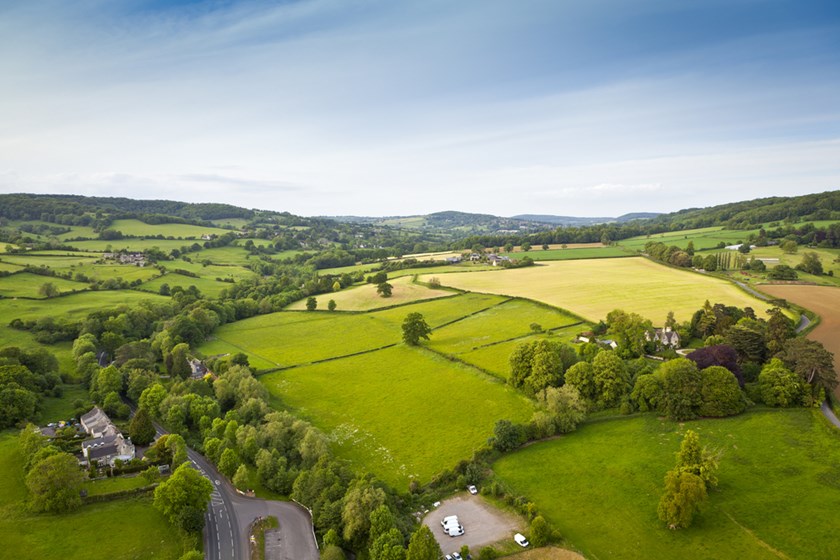
The cultural, economic, and political history of the Fenlands, including my Cambridgeshire home in East Anglia, offer an inspiring tale of biodiversity ravages, resistance and rewildings. Across nearly 1,500 square miles of southeastern Lincolnshire, most of Cambridgeshire including parts of historic Huntingdonshire, and the westernmost parts of Norfolk and Suffolk, the Fens lie inland of the Wash. I was raised in this region where my grandfather and ancestors made their homes, and it is beautiful with wide open skies, vast misty wetlands, unique and wonderful wildlife, and distinct local communities. Local communities here hold a rich history, interwoven with indigenous religious practices and a spirit of resistance against external forces and exploitation, dating back to the days of the Gyrwas (the Fenlanders, or Fennish commoners) under King Canute. The history of Fenlands peoples and nature is a story of resistance to the destruction of biodiversity lands and livelihoods, which continues to this day through the conservation, carbon sink, and rewilding projects of local communities, youth, historians and scientists, including from the University of Cambridge. 

Cultural history of environmental stewardship

The independence and cultural identity of local fenlands Peoples has always been specially connected to the stewardship of the land and waterways. As archaeological and anthropological evidence reveals, the beliefs of the original fenland peoples were marked by a profound respect for nature. A pantheon of spirits and deities were associated with the natural features of their environment. Water, in particular, held sacred significance due to its abundance and vital role in daily lives. The Fenlanders worshipped various water spirits, believed to inhabit the rivers, lakes, and marshes. These spirits were seen as both protectors and potential threats, necessitating rituals to appease them and ensure safe passage and bountiful fishing. 

Sacred sites include springs, wells, and groves, and many of these survive to this day, albeit overwritten or repurposed by Christian monasteries or churches. For example, the cathedral and monastery at Ely were built on historic pagan ritual sites. Over time, the imposition of Christianity transformed the religious landscape of the Fenlands. Many local practices were either absorbed into Christian rituals or suppressed, although traces of indigenous beliefs persisted within a Christian framework. For instance, sacred wells became associated with saints, like our Lady of Walsingham or the wells at Walsingham Abbey, and seasonal festivals with processions were adapted into Christian celebrations.

The distinct cultural identity and local knowledge of the Fenland peoples has played a crucial role in resistance against external forces, especially during periods of conquest. The encroachment of Roman, Saxon, and later Norman influences brought attempts to impose new government, laws, practices and administrative controls. However, the fenlanders fought back. Control and invasion was fiercely resisted by the locals, including Hereward the Wake, a local hero who led a rebellion against Norman rule in the 11th Century. His legacy symbolises the enduring spirit of resistance and the defence of local traditions, and inspires local youth, even to this day.

Political history of the Fenlands

The Fenland’s unique ecology and geography, with isolated island homes, floating reeds and shifting lakes and riverbeds, provided areas of retreat from enemies and allowed considerable independence in terms of religion and beliefs. And it is through the draining and destruction of these unique wetlands, threatening the wildlife and rich natural systems with destruction, that very nearly destroyed the Fenlands identity, culture and local livelihoods from the 1600s onwards. For centuries, lords and aristocrats advanced proposals to enclose the commons, then drain the Fens to access the naturally rich soil for farming. 

As one historical example, the Isle of Axholme wetlands commons were guaranteed by ancient treaties such as the 1359 Axholme Deed of John de Mowbray, which was kept a locked iron-bound chest in the parish church of Haxey under a stained-glass window of Sir John holding the accord. When Cornelius Vermuyden, a Dutch entrepreneur, sought to violate these rights with a company of ‘Adventurers’ (investors), over two thousand commoners resisted. In 1629, local women verbally distracted drainage workers, while men ambushed them, filling in the ditches, smashing tools, and even constructing mock gallows to loom over the diggers, making clear the consequences of continuing to break the Treaty of Axholme. According to government records of 1629, rather than justice, fen people faced penalties and harsh punishments for making their views heard, and refusing to support their own dispossession, including being beaten and jailed. However, they continued to resist, driving cattle through enclosures. 

Economic history of the Fenlands

Although local resistance was fierce, the adventurers and investors finally embarked on large-scale enclosure and drainage of the fens in the 1800s, using foreign workers, windmills and then steam pumps to pull the water away from the majority of the fens, filling in the common wetlands with private holdings and farms. A group of wealthy and powerful investors under the Earl of Bedford near Lincoln came together to canalise the fenlands rivers, undertaking massive earthworks, levelling and installing embankments and relief channels, and dredging operations to drain and privatise the collective wetlands areas. Unfortunately, their ‘Bedford Corporation’ also destroyed the local habitat of wildlife and ecosystems, taking away the natural resources and livelihoods of many local fishing and wildcrafting communities. Employing constables and guards, and hiring labourers from outside the area, they built pumps and small channels to disrupt and eliminate the water so that just the fertile mud was left. 

These exploitative projects faced heavy opposition from the local villages and fenlands peoples, who worried about their access to eels, fish, waterfowl and game. Local groups organised to burn down pumping stations and refill ditches overnight, they even hosted cultural events and festivals to disguise attempts to disrupt the dredging operations. The fenlands Peoples resisted on all levels, even taking petitions to the Privy Council and to the King in their defence. While the draining eventually succeeded, and vast farmlands were planted, East Anglia is already facing the results of that folly, as the rivers and canals silt up, and the flooding, with only scattered remnants of peat bogs and washes to absorb the rains, becomes worse every year, drowning villages and towns. 

Fenlands today: Taking action for conservation 

Still, the history of our fens is not over. Local peoples, joined by nature advocates. In the 2000s, local and national governments are working to re-wild areas of the Fenlands, reclaiming, and restoring them in order to prevent flooding and natural disasters in response to climate change and biodiversity loss. The Wicken Fen Vision 2030 plans to nearly quadruple the protected wetlands as a carbon sink and a local biodiversity haven. At the Great Fen, a vast fenland landscape between Peterborough and Huntingdon, as part of two National Nature Reserves, they are undertaking one of largest restoration projects ever for Europe, as landscapes are being restored and transformed for the benefit of both wildlife and people. With the addition of 120 hectares by rewilding Speechly’s Farm in 2023, completes a massive fenland jigsaw, reversing the harmful effects of those drainages from the 1600s to the 1850s, and creating a continuous corridor of natural wetlands between Woodwalton Fen and Holme. 

Conclusion

In conclusion, the story of biodiversity resistance and rewilding in the Fenlands highlights the deep connection between a People and the environment. Our Fenland Peoples’ ability to maintain cultural identity and resist external pressures underscores the powerful role of belief systems in shaping and preserving community cohesion. As we explore the history of the Fenlands, we can all learn a deeper appreciation for the resilience and creativity of these communities, and their continued attempts to find a balance between nature and livelihoods, one that respects and restores the local environment and its unique culture.

Bibliography 

Ash, Eric H. The Draining of the Fens: Projectors, Popular Politics, and State Building in Early 

Modern England. Johns Hopkins Studies in the History of Technology. Baltimore (Maryland): Johns Hopkins university press, 2017.

Boyce, James. Imperial Mud: The Fight for the Fens. London: Icon, 2020.

Pryor, Francis. The Fens: Discovering England’s Ancient Depths. London: Apollo, 2020.

Sly, Rex. From Punt to Plough: A History of the Fens. Reprinted. Stroud: Sutton Publ, 2003.

Other Resources Used:

JISC Archives Hub (online: www.archiveshub.jisc.ac.uk, last accessed 21 June 2024)

The Ouse Washes (online: www.ousewashes.info, last accessed 21 June 2024)

Literary Norfolk (online: www.literarynorfolk.co.uk, last accessed 21 June 2024)

Wicken Fen (online: www.nationaltrust.org.uk, last accessed 21 June 2024)

The Great Fen (online: www.greatfen.org.uk, last accessed 21 June 2024) 

Maasai are the Guardians of Life on Earth

By Naipanoi Onesmo Olengurumwa, 11, Tanzania

My father and my grandfather grew up in the middle of an ecological system living with animals and nature. Yes, we coexist with animals and nature. Let’s use this indigenous knowledge to protect the Serengeti/Loliondo and Ngorongoro ecosystem and all the lives on it. Yes, we are the best implementers of SDGs goal 15 and tribe of the soil.  

We have a rich cultural heritage that is deeply intertwined with the environment. Traditionally we have developed a sustainable way of life that respects the balance of nature. This relationship positions us as crucial stakeholders in global efforts towards sustainable development, climate change adaptation strategies and guardians of life on earth. Yes, animals are part of our clans. For instance my father and grandfather are from the Irmakeseni Masai clan which also belongs to the community of zebras. Yes, we share common things, and they often come close to our homes and graze together with our cows. They run to our homes for refuge against predators. Please, for our survival as indigenous community attached to nature and for protection of ecology and ecosystem in Ngorongoro and Seregent/Loliondo Plains, don’t separate us.  

Our indigenous knowledge includes understanding seasonal migrations of wildlife and water  resources which protect the Serengeti ecosystem. We use our traditional rotational grazing styles to prevent overgrazing in any one area while promoting biodiversity by allowing  various plants to thrive and breeding of wildebeest. For instance, we have been using part of our village lands called osero with 1500 sqkm in Loliondo to conduct traditional rotational grazing. Sadly, due to on going landgrabing in our home, this land is nolonger part of our land villages. This practice supports not only livestock health but also wildlife conservation as it creates a balanced ecosystem where both domestic animals and wildlife species can coexist. Kindly, make use of our indigenous knowledge of nature management to save the Serengeti/Loliondo and Ngorongoro ecosystem, and avoid fortress conservation laws that evict us from our traditional land. We are attached to nature as indigenous conservators of nature and life on earth. Please respect this and use this knowledge to manage climate challenges in Ngorongoro.

Can the New BNG Policy Improve ‘Life on Land’ in the UK?

By: Rowena Shivam, 18, UK

‘Halt biodiversity loss’ is a crucial part of Sustainable Development Goal 15. Globally, over 1 million animal and plant species are facing extinction (United Nations, 2019). The United Kingdom has the lowest level of biodiversity in the G7 but also one of the worst housing crises (House of Commons Environmental Audit Committee, 2021). House-building, along with associated infrastructure development like roads, transport and waste disposal, leads to habitat destruction and biodiversity loss. This creates issues for sustaining life on land.

Over the last year, I have been following the development of a new UK law that could significantly improve our progress towards SDG 15: Biodiversity Net Gain (BNG). BNG is a novel approach to land management that leaves biodiversity in a measurably better state than before any development. This policy could create or enhance up to half a million hectares of biodiverse habitat in the UK by 2030 (National Audit Office, 2024). Whether this level of success is achieved or not will be determined by the BNG Metric which analyses the size, condition, importance and location of new habitats. All new developments must generate at least 10% more habitat than previously existed in the area, helping wildlife to thrive (Department for Environment, Food & Rural Affairs, 2024).


BNG isn’t just for animals and plants; it can sustainably improve life on land for people too. It has increased the amount of land approved for new housing. Better access to nature will improve our physical and mental health. Increased vegetation will help reduce pollution and flash flooding. Even the economy is being boosted through BNG with new jobs in research, planning and legislation (The Environmental Agency, 2024).

However, there were some challenges that delayed BNG’s implementation. To better understand these issues I surveyed a group of 21 policymakers, homeowners, lawyers and conservationists. Only 38% believed BNG could significantly improve the UK’s biodiversity and 50% felt it might instead worsen our housing crisis by increasing prices. Nonetheless, BNG has now been mandatory since February 2024 and we are already seeing some early successes. I believe that with continued monitoring, evaluation and data collection over the next few years, this policy could help improve wildlife and human life on land in the UK.

References

Department for Environment, Food & Rural Affairs. (2024, February 12).
Understanding biodiversity net gain. GOV.UK.
https://www.gov.uk/guidance/understanding-biodiversity-net-gain


House of Commons Environmental Audit Committee. (2021). House of Commons Environmental Audit Committee. Biodiversity in the UK: bloom or bust? First Report of Session 2021-22 HC 136.
https://committees.parliament.uk/publications/6498/documents/70656/default/


United Nations. (2019, May 6). UN report: Nature’s dangerous decline “unprecedented”; species extinction rates “accelerating” – United Nations Sustainable Development. United Nations. https://www.un.org/sustainabledevelopment/blog/2019/05/nature-decline-unprecedented-report/ 


National Audit Office. (2024). Implementing statutory biodiversity net gain.
Department for Environment, Food & Rural Affairs and Natural England.
National Audit Office.
https://www.nao.org.uk/wp-content/uploads/2024/05/implementing-statutory-biodiversity-net-gain.pdf


The Environmental Agency. (2024, April 2). The Environment Agency’s role in
Biodiversity Net Gain – Creating a better place.
https://environmentagency.blog.gov.uk/2024/04/02/the-environment-agencys-role-in-biodiversity-net-gain/

Biodiversity in Crisis: Liberating Marine Life

Artwork by Lasya Priya Manala

By: Shubhi Batra, 11, India

Sustainable Development Goal 14 (SDG 14), titled “Life Below
Water,” focuses on conserving and sustainably using the
oceans, seas, and marine resources. Oceans cover over 70%
of the Earth’s surface and are critical to sustaining life on the
planet. They regulate the climate, provide food and livelihoods
for billions of people, and house a vast array of biodiversity.
However, human activities such as overfishing, pollution, and
climate change are severely threatening marine ecosystems.
SDG 14 aims to reduce marine pollution, protect marine and
coastal ecosystems, regulate fishing practices, and ensure that
oceans remain healthy and productive. Achieving this goal is
essential for maintaining the balance of marine life, supporting
the livelihoods of those who depend on the oceans, and
ensuring a sustainable future for all.


Some ways biodiversity is severely harmed:

1. Marine Pollution 

Plastic Pollution: Oceans are  filled with millions of tons of  plastic waste each year, which harms marine life and ecosystems. Marine animals, like turtles, fish, and seabirds, often ingest or become entangled in plastic  debris, leading to injury or death. 

Chemical Pollution: Industrial  waste, agricultural runoff, and untreated sewage, introduce harmful chemicals, such as heavy metals  and pesticides, into marine environments. These pollutants can cause  severe damage to marine species and disrupt entire ecosystems. 

2. Overfishing and Sustainable Fishing 

Overfishing: The depletion of fish stocks due to overfishing  threatens food security, livelihoods, and the balance of marine ecosystems. Many fish species are harvested at rates faster than they  can reproduce, leading to population declines.

Sustainable Fishing: Implementing sustainable fishing practices involves  setting catch limits, protecting endangered species, and using methods that minimize bycatch (the capture of unintended species). Sustainable fisheries management ensures the long term viability of fish populations and marine ecosystems. 

3. Marine Protected Areas (MPAs) 

Importance of MPAs: Establishing Marine Protected Areas is  crucial for conserving marine biodiversity. MPAs restrict human  activities in designated regions, to protect vulnerable species and  habitats,allowing ecosystems to recover and thrive. 

Global Targets: SDG 14 aims to increase the coverage of MPAs, by setting a target to conserve at least 10% of coastal and marine areas by 2030. These areas serve as safe havens for marine life, helping to maintain  healthy oceans.

The Mysterious Case of the Missing Marine Life

Artwork by Aqif Shairazee Abdul Rashid bin Othman

By: Deepesh Ayyapparaj, 12, India

Imagine a world where the ocean’s majesty is diminished, its vibrancy dulled, and its songs silenced. This is the reality we face if we don’t act to protect our planet’s marine life. This is the alarming reality we face today, a mystery of missing marine life unraveling before our eyes. But like any good mystery, there are clues and suspects, and with careful detective work, we can solve this case and restore the health of our oceans.


The Whodunit: Identifying the Culprits
The culprits in this mystery are not hidden villains; they are well-known to us, and they operate in plain sight. Climate change, pollution, and overfishing are the prime suspects in the disappearance of marine species. Rising ocean temperatures and acidification are altering habitats, making it difficult for creatures to survive. Pollution from plastics, chemicals, and agricultural runoff chokes our waters, harming marine life. Overfishing and destructive fishing practices deplete fish populations, disrupting the delicate balance of the ocean’s ecosystem.

The Detective Work
But there’s hope! By investigating our own impact on the ocean and making changes, we can crack the case of the missing marine life. We can reduce our carbon footprint, choose sustainable seafood options, and support conservation efforts. Community clean-ups, campaigns against single-use plastics, and advocacy for stronger environmental policies are all part of the detective work needed to solve this case.

The Verdict
The disappearance of marine life is a direct result of human activity. However, the verdict is not yet final, and we have the power to change it. By making conscious choices and advocating for the protection of our oceans, we can ensure that the verdict is one of hope and restoration. Let’s work together to bring the ocean back to life, hear its songs once more, and witness its majestic creatures’ return. The ocean is our shared heritage, and it is up to us to protect it.

Mother Earth, Her Ecosystems, Man and Woman!

Photo by Aasvi Kedia

By Wezi Emmanuel Chilubanama, Zambia

Sustainable Development Goal 15 is a very important goal because it is about me, the next person, and the other and the entire ecosystem of the world. Life on land is not just for the human race, but the whole ecosystem around us, and we are only but a part of it. This applies to both plant and animal life. If anything, most animals, including human beings, are interdependent. Let’s see how this happens in at least two ways.

First, ecosystem members depend on each other for food. Animals including man and woman are consumers of plants and decomposing animal carcasses provide nutrients for plants. This interdependency is required to sustain ecosystems and life on earth. Secondly, procreation is enabled through ecosystem interdependence. For example, most seeds are dispersed through animals. Seed dispersal and pollination are crucial steps in the reproductive cycle of plants, and are facilitated by animals, including humans. 

As humans make more space for businesses, agriculture or housing, trees are cut down. Now don’t just think of it as deforestation but as displacement of wildlife. Humans are not only disturbing forest wildlife, but are also cutting down trees that might not be replanted! If man and woman keep doing this, we might as well learn how to breathe in carbon dioxide! How about we share living places with plant life instead?

With this information in mind, we must not only appreciate life on land but also take care of Mother Earth and her endowments. Man and woman must make some areas completely off limits in order to keep as much fauna and flora safe. From the softness of the grass to the chilling shade of a large tree, animals find some comfort. Man and woman may get this similar feeling from the roofs over their heads or soft rugs; man and woman must also think of the creatures that can’t get this same luxury due to their actions.

In conclusion, the world houses beautiful sites to see, not man-made but naturally made. We can’t continue to take it for granted, so let man and woman fight to keep Mother Earth and her ecosystems safe, as well as grow and develop along with her.

T is for Tiger

Artwork by Ayan Kamath Mehra

By: Anisa Daniel-Oniko, Nigeria/UAE

The other day, my family and I were playing a game called Name-Place-Animal-Thing, which works quite simply. You work through the alphabet, naming one of the aforementioned for each letter you land on. Somewhere around the T, we turned reflective.

“You know,” my mother said. “If we don’t work very hard, children will be born that will never connect the letter T to the tiger.” It is a sad reality.  So many species have already been spun into myths and memories, and if we don’t devote ourselves to eradicating the cycle, it will continue. But just how does that cycle begin?

Well, it is common knowledge that certain animals are poached for body parts and products (such as ivory, or shark fin soup). However, even if you don’t count illegal trade, hunting and harvesting have decimated the numbers of several species, blotting out some entirely (National Research Council (US), 1995). This, for example, was the fate of the passenger pigeon—a bird that abounded in American airspace during the 1800s. The ease of hunting the birds dwindled their numbers to nothing—the very last one, Martha, died in captivity in 1914 (National Museum of Natural History, 2019).

Then there is the matter of habitat. Climate change aside, anytime humans expand territory, the ecosystem suffers dire losses. Animals who previously inhabited the lands and seas—such as the dodo, or the Okinawa dugong (Koja, 2024)—are felled by civilization, new cohabitants, or disease. Humans and other species don’t live well together—we hunt or hinder each other often, stealing livelihoods. Like fitting a square peg into a round hole, urbanisation and urban sprawl cannot be done without destruction.

That is how extinction happens, and already the tigers have joined the ranks of the 45,300 IUCN-indexed species threatened by it (IUCN, 2024). Three tiger species are already extinct, and double that are currently endangered (McGonagle, 2024). But the conservation battle isn’t one without hope. In Bhutan this year, after a yearlong research expedition,131 Bengal tigers were discovered, 27% more than in 2015 (United Nations Environmental Programme, 2024). This spike was brought on by the tireless efforts of conservationists in the region and proves to us something vital. It is possible to turn back the tide on the damage done to the environment, and perhaps children will still grow up remembering that T is for the big cat with stripes. 

References

IUCN. (2023). The IUCN Red List of Threatened Species. IUCN Red List of Threatened Species; IUCN. https://www.iucnredlist.org

Koja, K. (2024, June 3). No dugongs found near Marine base on Okinawa after 3-year search, officials say. Stars and Stripes. https://www.stripes.com/branches/marine_corps/2024-06-03/dugong-marine-corps-runway-okinawa-14064158.html

McGonagle, J. (2023, November 28). Tiger Subspecies: Six Surviving- Three Extinct. The Tiniest Tiger. https://conservationcubclub.com/tiger-subspecies-six-surviving-three-extinct/

National Museum of Natural History. (2019). Extinction Over Time | Smithsonian National Museum of Natural History. Smithsonian. https://naturalhistory.si.edu/education/teaching-resources/paleontology/extinction-over-time

National Research Council (US). (2016). Species Extinctions. Nih.gov; National Academies Press (US). https://www.ncbi.nlm.nih.gov/books/NBK232371/

United Nations Environment Programme. (2024, January 19). In Bhutan, the endangered Bengal tiger is making a comeback. UNEP. https://www.unep.org/news-and-stories/story/bhutan-endangered-bengal-tiger-making-comeback