
Have We Taken Too Long in Taking Action to Fulfil SDG14?

By: Harry Langford

Given that our planet’s oceans cover up 71% of the planet (National Geographic, 2023), protecting and shielding them from climate change should be our priority. Our actions and our neglect since the industrial revolution have drastically damaged our oceans, making it vital for us to act quickly and extensively to salvage the ecosystems which are struggling to survive in spite of rather than because of our actions. According to the United Nations (2021):

As the planet’s greatest carbon sink, the ocean absorbs excess heat and energy released from rising greenhouse gas emissions trapped in the Earth’s system. Today, the ocean has absorbed about 90 percent of the heat generated by rising emissions”.  

This is resulting in melting ice caps, rising sea levels of around 3.6 cm per decade (Oppenheimer, M et al., 2019), marine heatwaves, ocean acidification and so much more. Extreme storm surges, flooding, coastal erosion, marine heatwaves and landslides are becoming annual events rather than the historic pattern of once a century. Due to the increased number of marine heatwaves, the UN environment programme predicts that ‘every one of the world’s coral reefs could bleach by the end of the century if the water continues to warm” and that the irreversible loss of marine and coastal ecosystems will be catastrophic: by 2100 over half of the world’s marine species will be on the brink of extinction (United Nations, 2021). If we woke up tomorrow and there was an increase of 1.5 degrees Celsius, around 80% of coral reefs would be destroyed, devastating marine life. 

Action needs to be taken immediately to stop this destruction. So which actions are being taken? The UN’s Sustainable Development Goal 14 focusses on conserving and sustainably using the oceans, seas and marine resources for sustainable development. There are 2 main actions being focussed on globally to fulfil this goal: the Biodiversity Beyond National Jurisdiction Treaty (“BBNJ”) and the High Seas Alliance. BBNJ, or the “High Seas Treaty”, was signed in September 2023 by UN member states to safeguard life in the ocean beyond national jurisdiction. This is the first comprehensive cross sectoral ocean treaty of its kind and entailed 20 years of negotiations (United Nations, 2023). This treaty gives practical effect to SDG14 with signatories agreeing to protect at least 30% of our seas by 2030. This agreement “will enable the establishment of area-based management tools, including marine protected areas, to conserve and sustainably manage vital habitats and species in the high seas and the international seabed area” (United Nations, 2023). 

BBNJ has 4 main topics and key ideas:

  1. Fresh Protection beyond borders –  the high seas should have protection against destructive trends such as pollution and the unsustainable fishing activities that happened in the past.
  2. Cleaner Oceans – “Toxic chemicals and millions of tons of plastic waste are flooding into coastal ecosystems, killing or harming all marine life and making their way into the food chain and ultimately being consumed by humans” (United Nations, 2023, June 19), thus harming marine life, but also humans. According to the UN, by 2050 there could be more plastic than fish in the ocean (United Nations, 2023, June 19). In 2021, more than 17 million tons of plastic were present in the ocean: this number is predicted to double or even triple each year by 2040 (United Nations, 2023, June 19). This Treaty contains provisions based on the “polluter-pays” principle and provides for signatories to carry out an assessment of the impact of environmental activities intended to be carried out outside of that party’s jurisdiction.  
  3. Sustainably managing fish stocks – the treaty will stop the trend of overfishing helping to restore fish stocks.  According to the UN, over a third of fish stocks are over-exploited (United Nations, 2023, June 19). The treaty emphasises the need to build capacity as well as for the transfer of marine technology and development of national regulatory frameworks.
  4. Lowering temperatures – The Treaty provides guidance for ocean management which will improve “ecosystem resilience” and help to counter the harmful consequences of climate change and ocean acidification, restoring the ecosystem’s original functionality and, in turn, its ability to cycle carbon.

Who is fighting for the ratification of the treaty? Mainly, it is the High Seas Alliance, with the help of the UN and the International Union for Conservation of Nature. The High Seas Alliance is composed of 50+ non-governmental members who are all working together to achieve SDG14 and critically, to protect our oceans (High Seas Alliance, 2024a). Before the High Seas Treaty, there was no legally binding mechanism to conserve marine life and its ecosystems. At the time of writing, 104 countries have signed the High Seas Treaty (High Seas Alliance, 2024b), demonstrating their desire to consent to a new international law of the oceans. Individual countries now must ratify the treaty through their own legal process to make it national law. Once 60 countries do so, a 120-day countdown will be triggered, at the end of which the global agreement will enter into force, enabling a robust protection of our high seas and marine life.  

How close are we then to it becoming international law? So far, whilst 104 countries have signed the treaty, only 13 have ratified it (High Seas Alliance, 2024b). Some of this can be explained by the process of ratification and how it differs from country to country, some harder to do than others.  Impressively, all 27 EU members of the UN signed the High Seas Treaty – the ratification process must now take place at a national level. The High Seas Alliance have announced that they are hopeful to announce the 60+ ratifications in the 3rd UN Ocean Conference taking place in Nice, France, in June 2025. 

Is this initiative too late to make a real impact? If you asked the average citizen, they would most likely answer yes. It is this mindset that itself poses a huge risk to the future of our planet. Professor Heidi Toivonen of Twente university said “Climate change might push people towards a sense of complete loss of agency, the feeling that there is nothing we can do, especially as the question of whether it is already too late to prevent dangerous climate change is discussed in serious science circles” (Broom, 2023).  The most powerful thing we can do is to come together and work together to prevent a worsening of climate change. Great progress has been made since the signing of the 2016 Paris Agreement, with significant steps taken such as, of course, the High Seas Treaty. The answer to whether it is too late to stop climate change is no, but we must act together, raise awareness, petition our leaders and protect our oceans now.  

References

Albert, D. (2024, April 24). EU’s Approval to Ratify the High Seas Treaty: 101 Explainer – High Seas Alliance. High Seas Alliance. https://highseasalliance.org/2024/04/24/eus-approval-to-ratify-the-high-seas-treaty-101-explainer/ 

Broom, D. (2023, June 19). Too late to save the planet? Why this climate crisis myth is so prevalent – and problematic. World Economic Forum. https://www.weforum.org/agenda/2023/06/too-late-climate-crisis-myth/ 

High Seas Alliance. (2024a). About the High Seas Alliance. High Seas Alliance. https://highseasalliance.org/about-us/ 

High Seas Alliance. (2024b). High Seas Treaty Progress Table. High Seas Alliance Treaty Ratification. https://highseasalliance.org/treaty-ratification/table-of-countries/

National Geographic. (2023, October 19). Ocean | National Geographic Society. Education.nationalgeographic.org. https://education.nationalgeographic.org/resource/ocean/ 

Oppenheimer M et al. (2019). Sea level rise and implications for low lying islands, coasts and communities, in IPCC Special Report on the Ocean and Cryosphere in a Changing Climate. https://www.ipcc.ch/srocc/

United Nations. (2021). How is climate change impacting the world’s ocean. United Nations. https://www.un.org/en/climatechange/science/climate-issues/ocean-impacts 

‌United Nations. (2023, June 19). Beyond borders: Why new “high seas” treaty is critical for the world | UN News. News.un.org. https://news.un.org/en/story/2023/06/1137857 

United Nations. (2023). Agreement on Marine Biodiversity of Areas Beyond National Jurisdiction. Agreement on Marine Biodiversity of Areas beyond National Jurisdiction. https://www.un.org/bbnjagreement/en/bbnj-agreement/about-agreement

Guardians of the Sea: The Fight Against Ocean Pollution 

Artwork by Freya Kotter

By: Freya Kotter, 14, Austria

The ocean is a wonderful place. It is home to a huge number of species and it is crucial that we protect our oceans. If we don’t, it could lead to extinction of many species and creatures that we have not discovered yet, and cause an imbalance of the marine ecosystem. This would also affect us greatly as the ocean contributes to our lives as a whole by stabilising the water cycle and weather patterns, as well as giving us food. 

Plastic waste is a major contributor to loss of life below water as well as life on land. Plastic may be cheap and easy to produce but it takes decades to centuries for it to decay. This has become a real concern. Only 9% of the world’s plastic is recycled (Geyer, Jambeck, and Law, 2017), 12 million tonnes of plastic is dumped into the ocean every year, 8 million pieces of plastic make their way to the ocean every day (Surfers Against Sewage, 2024). Scientists have also warned us that plastics in oceans will triple between 2015 to 2025 (Government Office for Science, 2018). This is a huge problem as this will cause a significant decline in marine life. 

Plastic fishing nets are one of the biggest threats to the marine ecosystem. They are one of the main reasons that so many species die either because they get trapped or mistake it for food. Fishing nets also damage coral reefs and other habitats as they drift off and get caught easily. To protect the environment from these nets we could enforce a law to mark equipment, so if it gets lost and is found they can pay a penalty fee. However, to avoid all this from happening we need to take action and stop using as much plastic. There are already alternatives to plastics like biodegradable plastic made from natural substances like algae. Many conventional plastic wastes end up washing up on shore and pollute the soil, causing some plants to absorb microplastics, making them essentially 1% plastic!  

Other threats to the ocean include overfishing and global warming. Overfishing is sometimes taken too far which can cause the food chain to become less stable and therefore the whole ecosystem suffers. Global warming is another major issue because it causes the oceans to rise and weather patterns to change drastically over a short period of time. This can cause flash floods and the oceans to become more vigorous and erode more land rapidly over a shorter time span. Global warming, plastic waste and overfishing all harm our oceans and present a huge threat to the health of our planet. I think we should try to change our perspective and minimise the impact of our behaviour on our earth.

References

Geyer, R., Jambeck, J. R., & Law, K. L. (2017). Production, use, and fate of all plastics ever made. Science Advances, 3(7), e1700782. https://doi.org/10.1126/sciadv.1700782

Government Office for Science. (2018). Foresight Future of the Sea A Report from the Government Chief Scientific Adviser. https://assets.publishing.service.gov.uk/media/5afab2f440f0b622e060e2b7/foresight-future-of-the-sea-report.pdf

Surfers Against Sewage. (2024). Plastic pollution: facts & figures. Surfers against Sewage. https://www.sas.org.uk/plastic-pollution/plastic-pollution-facts-figures/

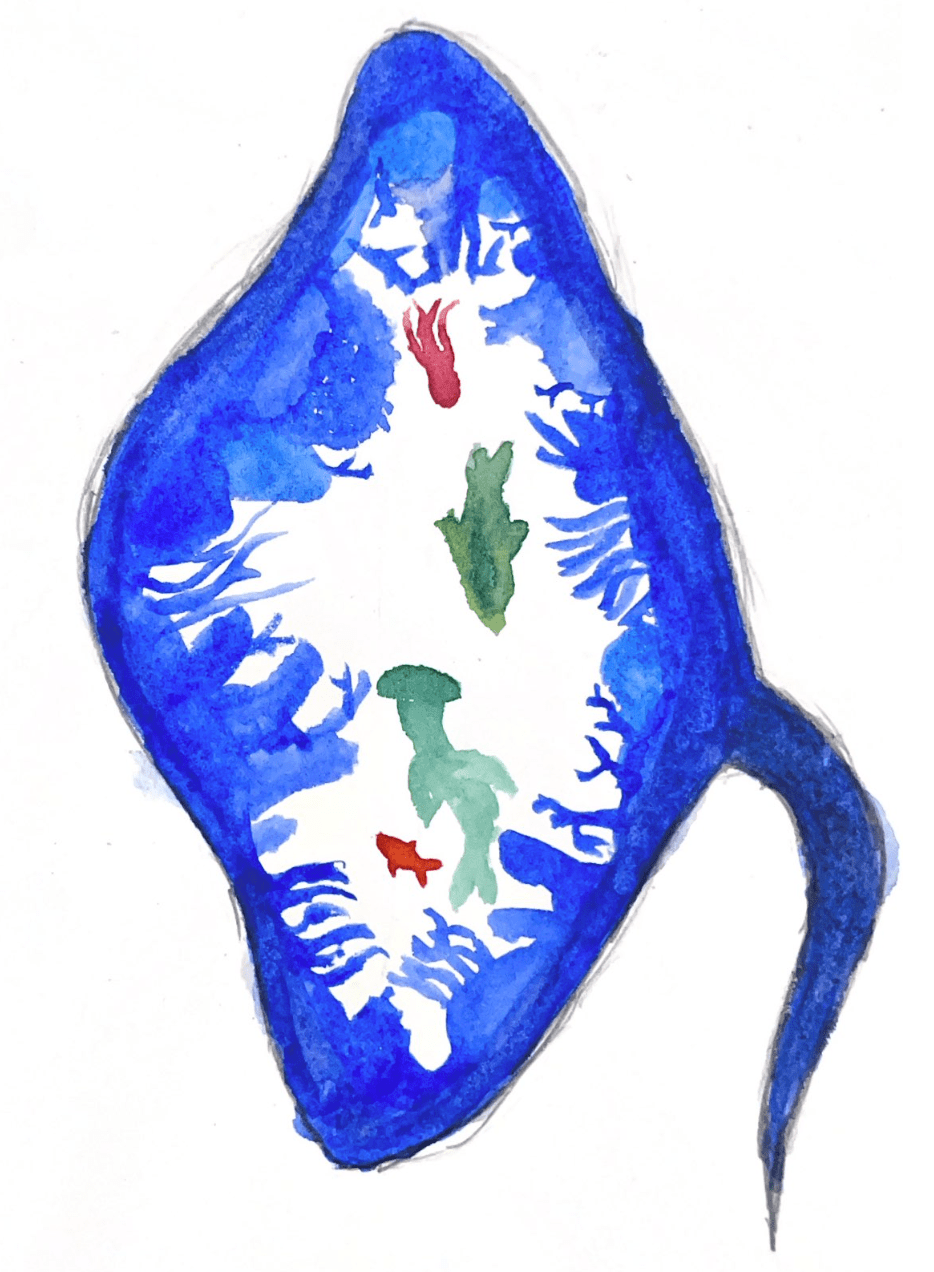
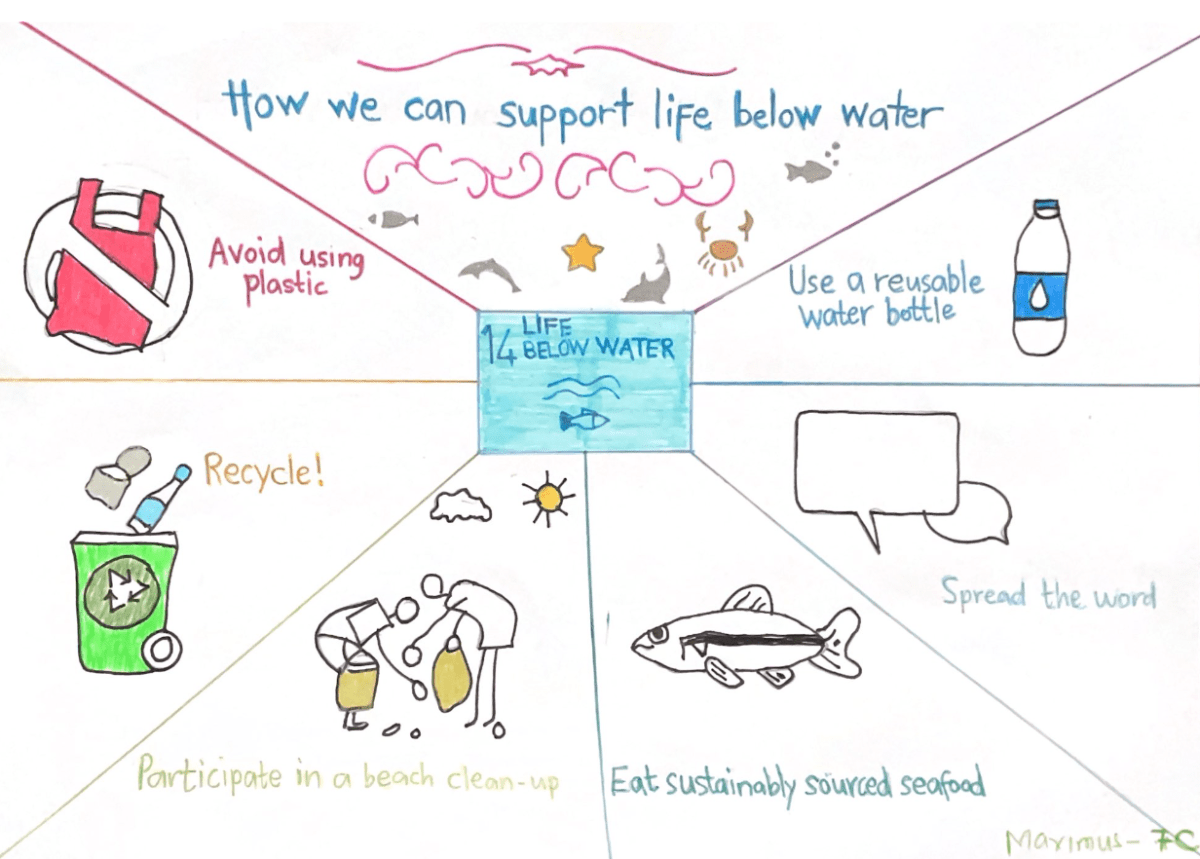
Earth: The Sea-Life

Artwork by Maximus Sanchez Francis

By Liyah Emeson, 13, UK

The SDG 14 (Sustainable Development Goal 14) is about ‘Life under Water’. The goal is “to conserve and sustainably use the oceans, seas, and marine resources for sustainable development.” In other words, this means that they aim to protect water bodies and to use marine resources in a way that as the world continues to develop, the resources will not be depleted.

The Earth is a beautiful planet with different biomes and species of life. There’s wonderful marine life in the oceans and seas. However, some of these incredible species are becoming endangered due human causes like pollution, overfishing and many more. As a planet, we need to make an effort to preserve aquatic life and, fortunately, there are many ways to do this effectively. Let’s focus on marine pollution.

Marine pollution happens when chemicals and rubbish enter the oceans due to human activities. This pollution is very harmful as it can result in damage to the environment, which affects the health of all living organisms (including humans!) and economic structures across the world.

Marine pollution can be reduced by taking care of beaches and minding our carbon footprints. Simple things like reducing litter at the beach and using fuels that release less carbon can positively impact our waters making it a safe place for aquatic life to live and thrive in.

Nonetheless, marine pollution isn’t the only problem affecting life under water. There are many other factors that affect the oceans and we need to collectively continue to raise awareness of them in order to protect the safety of our waters and ourselves.

Seeking the New Aristotle

By Peter Wales, 15, England

Around 340BC, Greek philosopher and Polymath Aristotle discovered the Earth to be in fact spherical, not flat as was the common opinion of the day (Greek evidence for the Earth’s shape and spin, 2024). This however, did not keep him from a newfound idea that Earth, of ‘high mass’ was at the centre of the known Universe (Kenny and Amadio, 2024). Similarly, in a modern day of technology and an abundance of newfound knowledge concerning the Universe and its many secrets, along with the modernisation of our daily lives, life on our planet has adapted and thrived. Yet, like Aristotle, we have drawn our eyes away from the startlingly obvious reality that our Earth is indeed not perfect or invincible. Through neglect and ignorance, we have driven our planet’s oceans and land into a place of Armageddon, likely to not only destroy the human race, but the Earth itself.

To deal with such fundamental issues, the United Nations devised seventeen Sustainable Development Goals (SDGs), of which 14 and 15 concern life below water and on land. Although these are a useful starting point, there are some underlying flaws. Firstly, however accurate and desirable these goals might be, they have not been enforced, leading to minimal action being taken in many cases. The main culprits are first world countries which should indeed be tasked in leading such action. I believe that the goals which are set at each COP summit every year must be individualised according to each country’s economic and environmental position. Furthermore, the goals set must aim to be achieved within four years, leading to smaller, more achievable goals, more progress, and less chance for governments to let their burden be passed onto the successive government. 

In relation to both SDG 14 and 15, there must be steps taken to make global improvement more achievable. One such step could be addressing the issue of unregulated large bodies of water, since almost sixty percent of freshwater bodies on our planet are transboundary (United Nations, 2023), meaning they are not managed by one country alone, leading to potential harmful activity in the absence of cooperation and standardised regulation. Cases such as deep sea mining, which directly harms the seabed, and ‘sea dumping’, where marine litter is deliberately or accidentally released into the seas or ocean, are a growing problem. A solution to this could be allocating unowned bodies of water to governments with the stability, capital and willingness to regulate them. 

Our Earth has been home to life for almost 4.3 billion years (Koppes, 2022), an anomaly in the Universe, a blip of life. Surely it is our task to protect what life there is, to not only ensure our own survival, but the survival of all species which inhabit our great planet and have done for millennia before us.

References

Greek evidence for the Earth’s shape and spin. (2024). IOPSpark. https://spark.iop.org/greek-evidence-earths-shape-and-spin

Kenny, A. J.P. and Amadio, Anselm H. (2024, September 10). Aristotle. Encyclopedia Britannica. https://www.britannica.com/biography/Aristotle 

Koppes, S. (2022, September 19). The origin of life on Earth, explained | University of  Chicago News. News.uchicago.edu. https://news.uchicago.edu/explainer/origin-life-earth-explained#when

United Nations. (2023). Transboundary Waters. UN-Water. https://www.unwater.org/water-facts/transboundary-waters

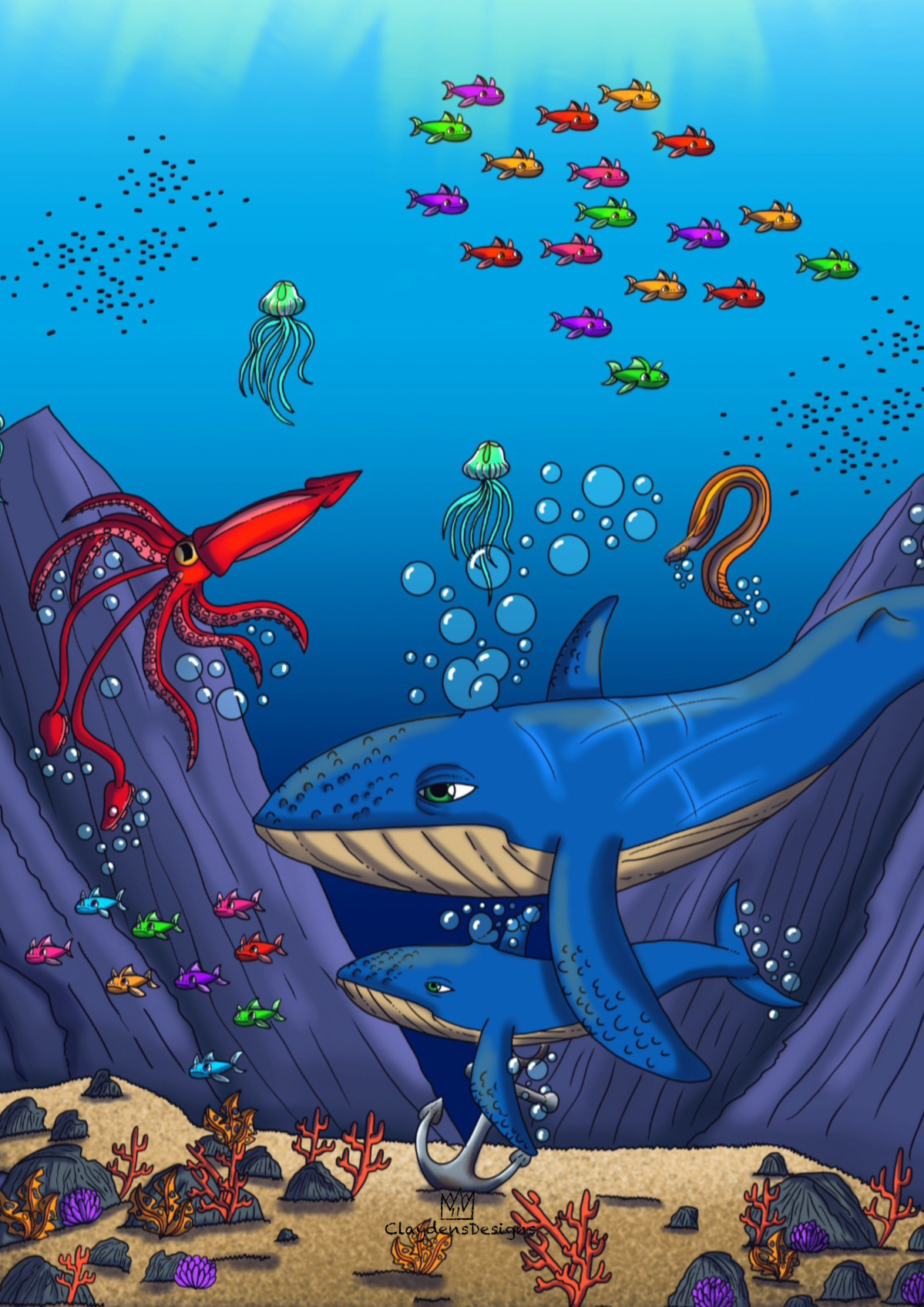
Echoes from the Deep

Artwork by Clayden Botes

By: Advika Gupta, 14, India/UAE

Growing up in Mumbai, the Arabian Sea was more than just a backdrop to my life; it was a part of who I was. Family outings to Juhu Beach, school trips exploring coastal biodiversity—it all ingrained in me a deep love for the ocean. But in 2021, that love took on a new urgency. The severe floods that year, which turned the lively streets of Mumbai into rivers, made me realize just how vulnerable our oceans—and by extension, our cities—are to the impacts of climate change. The relentless rain and rising sea levels left us feeling helpless as our home slowly submerged. In that moment, I realized that the ocean’s cry for help wasn’t just something happening far away. It was right here, affecting our lives in ways we could no longer ignore.


Now living in the UAE, I find myself surrounded by a different yet equally fragile marine environment. The crystal-clear waters of the Arabian Gulf have shown me the beauty of marine life but also its peril. I’ve travelled to various places, diving in the coral reefs of the Maldives, witnessing the bleaching of once-vibrant corals, and seeing plastic-choked beaches
in Southeast Asia. Each experience has deepened my resolve to act. The global scope of the problem is undeniable, but it’s the personal encounters with the degradation of these marine ecosystems that have driven me to take action.


Sustainable Development Goal 14, ‘Life Below Water’, is not just an abstract global objective, it’s a call to action that resonates deeply with me. In the UAE, I’ve joined local conservation groups focused on protecting the marine environment. One initiative that’s particularly close to my heart is our effort to restore seagrass meadows along the UAE coast. Seagrasses are often overlooked, but they play a vital role in maintaining healthy marine ecosystems. They provide habitats for marine life, act as carbon sinks, and protect against coastal erosion. Our team has been working to replant these meadows, and seeing them slowly come back to life has been incredibly rewarding.


I’ve also been advocating for the reduction of single-use plastics, organizing clean-up drives along the coastlines, and engaging with local schools to raise awareness about marine conservation. Seeing young students get involved has been incredibly inspiring. Some might wonder, can actions as simple as refusing a plastic straw or joining a beach cleanup really make a difference? But just as a forest begins with the planting of a single tree, these small, local actions are the seeds that can grow into a global movement, I hope. No effort is too small, and each one contributes to the broader fight to protect our oceans and combat the climate crisis.

As I look forward to the Conference of the Parties to the UN Convention on Biological Diversity in Cali, Colombia, in 2024, I carry with me the stories of these places, the memories of these endangered marine ecosystems, and the hope that our collective efforts can turn the tide. Protecting our oceans is a shared responsibility that transcends borders. It’s about ensuring that future generations can experience the same beauty and wonder that I was fortunate enough to witness as a child in Mumbai and now in the UAE. Do you hear the oceans crying out for help? It’s up to us to answer that call with the urgency and compassion it deserves.

Biodiversity in Crisis: Liberating Marine Life

Artwork by Lasya Priya Manala

By: Shubhi Batra, 11, India

Sustainable Development Goal 14 (SDG 14), titled “Life Below
Water,” focuses on conserving and sustainably using the
oceans, seas, and marine resources. Oceans cover over 70%
of the Earth’s surface and are critical to sustaining life on the
planet. They regulate the climate, provide food and livelihoods
for billions of people, and house a vast array of biodiversity.
However, human activities such as overfishing, pollution, and
climate change are severely threatening marine ecosystems.
SDG 14 aims to reduce marine pollution, protect marine and
coastal ecosystems, regulate fishing practices, and ensure that
oceans remain healthy and productive. Achieving this goal is
essential for maintaining the balance of marine life, supporting
the livelihoods of those who depend on the oceans, and
ensuring a sustainable future for all.


Some ways biodiversity is severely harmed:

1. Marine Pollution 

Plastic Pollution: Oceans are  filled with millions of tons of  plastic waste each year, which harms marine life and ecosystems. Marine animals, like turtles, fish, and seabirds, often ingest or become entangled in plastic  debris, leading to injury or death. 

Chemical Pollution: Industrial  waste, agricultural runoff, and untreated sewage, introduce harmful chemicals, such as heavy metals  and pesticides, into marine environments. These pollutants can cause  severe damage to marine species and disrupt entire ecosystems. 

2. Overfishing and Sustainable Fishing 

Overfishing: The depletion of fish stocks due to overfishing  threatens food security, livelihoods, and the balance of marine ecosystems. Many fish species are harvested at rates faster than they  can reproduce, leading to population declines.

Sustainable Fishing: Implementing sustainable fishing practices involves  setting catch limits, protecting endangered species, and using methods that minimize bycatch (the capture of unintended species). Sustainable fisheries management ensures the long term viability of fish populations and marine ecosystems. 

3. Marine Protected Areas (MPAs) 

Importance of MPAs: Establishing Marine Protected Areas is  crucial for conserving marine biodiversity. MPAs restrict human  activities in designated regions, to protect vulnerable species and  habitats,allowing ecosystems to recover and thrive. 

Global Targets: SDG 14 aims to increase the coverage of MPAs, by setting a target to conserve at least 10% of coastal and marine areas by 2030. These areas serve as safe havens for marine life, helping to maintain  healthy oceans.

The Mysterious Case of the Missing Marine Life

Artwork by Aqif Shairazee Abdul Rashid bin Othman

By: Deepesh Ayyapparaj, 12, India

Imagine a world where the ocean’s majesty is diminished, its vibrancy dulled, and its songs silenced. This is the reality we face if we don’t act to protect our planet’s marine life. This is the alarming reality we face today, a mystery of missing marine life unraveling before our eyes. But like any good mystery, there are clues and suspects, and with careful detective work, we can solve this case and restore the health of our oceans.


The Whodunit: Identifying the Culprits
The culprits in this mystery are not hidden villains; they are well-known to us, and they operate in plain sight. Climate change, pollution, and overfishing are the prime suspects in the disappearance of marine species. Rising ocean temperatures and acidification are altering habitats, making it difficult for creatures to survive. Pollution from plastics, chemicals, and agricultural runoff chokes our waters, harming marine life. Overfishing and destructive fishing practices deplete fish populations, disrupting the delicate balance of the ocean’s ecosystem.

The Detective Work
But there’s hope! By investigating our own impact on the ocean and making changes, we can crack the case of the missing marine life. We can reduce our carbon footprint, choose sustainable seafood options, and support conservation efforts. Community clean-ups, campaigns against single-use plastics, and advocacy for stronger environmental policies are all part of the detective work needed to solve this case.

The Verdict
The disappearance of marine life is a direct result of human activity. However, the verdict is not yet final, and we have the power to change it. By making conscious choices and advocating for the protection of our oceans, we can ensure that the verdict is one of hope and restoration. Let’s work together to bring the ocean back to life, hear its songs once more, and witness its majestic creatures’ return. The ocean is our shared heritage, and it is up to us to protect it.

Empowering Youth to Protect and Preserve Life Below Water

Artwork by Adeena Asif Mukadam

By: Adeena Asif Mukadam, 13, UAE

SDG Goal 14, “Life Below Water,” is about taking care of our oceans and seas. As a 13-year-old student from Year 8 at GEMS Cambridge School in Sharjah, UAE, I have seen firsthand how important it is to protect our oceans. I have been volunteering to clean up beaches and doing my part to make the ocean cleaner and safer for all the creatures that live there.


When I first started volunteering for beach cleanups, I was shocked by how much trash ends up in the ocean. Plastic bottles, bags, and even old fishing nets can be found tangled up on the shore. It made me realize that every little bit of trash we throw away can eventually harm marine life. That’s why I have made it my mission to keep raising awareness about ocean pollution in my school by creating posters and artwork. I have organized talks and activities to show my classmates why it’s so important to protect our oceans and how they can help.

One big part of this goal is to stop pollution in the oceans. As you can see in the artwork, a lot of plastic and other trash ends up in the water, hurting animals and even getting into the food we eat. The goal is to make sure we cut down on the amount of trash going into the ocean by 2025. This means everyone needs to work together to keep the oceans clean and safe. Through my experience, I have learned that protecting our oceans is not just about picking up trash – it’s about changing how we think and act. We need to be more careful about how we use plastic and make sure we recycle properly. I have also encouraged my friends and family to join beach cleanups and think twice before using single-use plastics.

Another part of the goal is about fishing. Overfishing is when people catch too many fish too quickly, which can make some kinds of fish disappear. SDG 14 wants to make sure that people fish in a way that doesn’t harm the fish populations. This means using better fishing practices and stopping illegal fishing so that there are always enough fish for everyone. Every small action we take can make a big difference.

Lastly, the goal is also about protecting places like coral reefs and mangroves that are home to many sea creatures. These places are in danger because of things like climate change and pollution. By protecting these areas and making sure they stay healthy, we can help the animals and plants that live in the ocean. In conclusion, SDG Goal 14 is about making sure our oceans stay healthy for the future. By volunteering, spreading awareness, and making smarter choices, we can all contribute to this important goal. I am proud to be doing my part, and I will keep working to ensure our oceans remain clean and full of life.

A Roughtail Stingray in Cuba

Artwork by Nicolas Patrick Oppman

By: Nicolas Patrick Oppman, 10, Panama/US

Hello, my name is Nico, I’m 10 years old, I live in Havana, Cuba, and I’m starting grade five. Last weekend I went to a beach in Cuba called Playa Larga for a last summer weekend outing and I saw something horrible! So I decided to share my story with you.

It was a regular day and my sister, my mom, and I had been kayaking off the coast of Playa Larga close to our weekend vacation rental. While we were putting the kayaks back into the house, we noticed a group of people on the beach surrounding three fishermen with nets in their hands.

We walked closer to see what the commotion was about and saw a huge roughtail stingray! Then we watched as one man picked up a bamboo club and slammed it on the stingray’s head. I was so horrified by what I saw that I walked away.

Some time later I came out to the beach to see if the stingray was still there. I was surprised to see the fishermen still trying to untangle the net from its limp body. I figured the ray was dead after all that beating. Then I overheard my mom asking the fishermen if they would eat the ray. “Yes,” one of them said, “It’s a delicacy in these parts.”

Later my mom told me I should write about what I had seen to share with other people, so I wrote this short story. I know now that whenever you catch a fish or sea creature and you plan to eat it, please kill it humanely and quickly so nobody has to suffer.

Adding on to that, I should say that we should stop overfishing because marine life (as all life) is meant to be studied and preserved, not overeaten and massacred.

Water

Artwork by Xiu Chen

By: Disha Balu, 17, UK

Will there be life below water when I grow up? 

I swam recently, in the sun-soaked seas of the Mediterranean. With poor eyesight, I could make out the shoals of shimmering forms that weaved in between my limbs, evaporating into the depths below my kicking feet as I propelled myself closer. If I squinted at just the right angle amongst the sun rays, I could make out colonies of colours blanketing the beds below. Every time I rose up to where the waves broke, I found myself contemplating how bleak and void the surface seemed in comparison to the lashings of life that navigated around me. 

The sands themselves had very few lifeforms relishing in the gentle heat, the chattering seagulls and washing waves in perfectly orchestrated combat. I recall pinpointing something that glinted, something that did not dart away into the darker blues as I plunged towards it. It plummeted quickly, a mass of blinding silvers and I saw at once it was nothing more than a rogue plastic bottle with its viscous brown sludge still bleeding into the water. I sank further, what I mistook for rows of sparkling shells were, in truth, daggers of plastic – scattered for the creatures that danced around me. 

The swaying corals revealed themselves to be a tangled mess bound from jagged hooks, crinkled canisters and barbed straws and the vibrant playground before me darkened almost at once. I spotted a looming spectre, an undulating phantom casting shadows on the wasteland beneath me and I had barely just managed to swerve away to realise it was not a jellyfish but an ominous swarm of plastic bags. Perhaps even more perilous than anticipated, I tried feverishly to grasp it but it voyaged towards the darker depths beyond the bay, poised to sting another.