What I Like the Most About Life on Land

By: Chama Ntabeni Chilubanama, 8, Zambia

As an 8-year-old boy in sunny Lusaka, Zambia, I like the fact that we normally have the perfect weather and we can take care of plants and animals. We can do more to make our environment clean and beautiful, and so we can remain healthy. They say, cleanliness is next to godliness and health!

I do not like it when I see litter thrown on the ground instead of the bins. It makes the surroundings dirty and unhealthy for all living things. I have a compost bin in the kitchen which I empty into the garden every morning. This is one way I want to help life on land. People should change and learn the benefits of recycling.

Right now, there is a drought in Zambia. What I mean by drought is there isn’t enough water because there isn’t enough rain, and people are suffering. People have been cutting down trees which are useful for making rain. We need to do something about the drought.

I like how we discover new places and how there are all sorts of animals and insects especially during the rainy season. I also like going to school and learning new things. I love animals, especially kittens and puppies. I also love to walk around in our garden to admire the different plants in all their shapes, sizes, colours and unique outlooks.

The plant I like the most is the Areca palm tree, because it is not too tall, it is just right and majestic along the swimming pool at home. I also like the Areca palm because it attracts beautiful bright coloured birds every now and again. I like the overhead view of the Areca palms when I go upstairs and I get a beautiful glimpse of all the bright and beautiful living creatures in my yard. I only muse to myself how awesome life on land is from a bird’s eye view. I wish I was a bird to see every living thing on earth. I love life on land!

Protecting our Fenlands: A Short History of East Anglia Biodiversity Ravages, Resistance and Rewilding

Artwork by: Nico Cordonier-Gehring

By: Nico Cordonier-Gehring, Canada/Germany/Switzerland/UK

Introduction

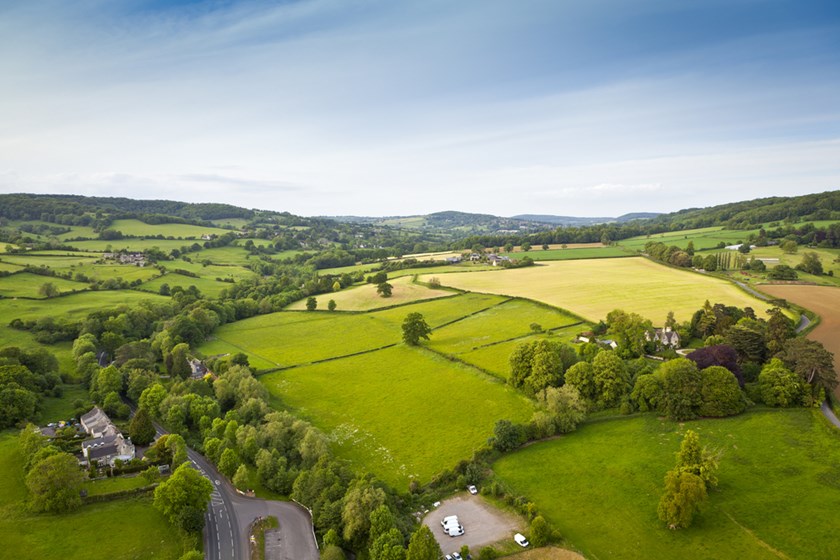
The cultural, economic, and political history of the Fenlands, including my Cambridgeshire home in East Anglia, offer an inspiring tale of biodiversity ravages, resistance and rewildings. Across nearly 1,500 square miles of southeastern Lincolnshire, most of Cambridgeshire including parts of historic Huntingdonshire, and the westernmost parts of Norfolk and Suffolk, the Fens lie inland of the Wash. I was raised in this region where my grandfather and ancestors made their homes, and it is beautiful with wide open skies, vast misty wetlands, unique and wonderful wildlife, and distinct local communities. Local communities here hold a rich history, interwoven with indigenous religious practices and a spirit of resistance against external forces and exploitation, dating back to the days of the Gyrwas (the Fenlanders, or Fennish commoners) under King Canute. The history of Fenlands peoples and nature is a story of resistance to the destruction of biodiversity lands and livelihoods, which continues to this day through the conservation, carbon sink, and rewilding projects of local communities, youth, historians and scientists, including from the University of Cambridge. 

Cultural history of environmental stewardship

The independence and cultural identity of local fenlands Peoples has always been specially connected to the stewardship of the land and waterways. As archaeological and anthropological evidence reveals, the beliefs of the original fenland peoples were marked by a profound respect for nature. A pantheon of spirits and deities were associated with the natural features of their environment. Water, in particular, held sacred significance due to its abundance and vital role in daily lives. The Fenlanders worshipped various water spirits, believed to inhabit the rivers, lakes, and marshes. These spirits were seen as both protectors and potential threats, necessitating rituals to appease them and ensure safe passage and bountiful fishing. 

Sacred sites include springs, wells, and groves, and many of these survive to this day, albeit overwritten or repurposed by Christian monasteries or churches. For example, the cathedral and monastery at Ely were built on historic pagan ritual sites. Over time, the imposition of Christianity transformed the religious landscape of the Fenlands. Many local practices were either absorbed into Christian rituals or suppressed, although traces of indigenous beliefs persisted within a Christian framework. For instance, sacred wells became associated with saints, like our Lady of Walsingham or the wells at Walsingham Abbey, and seasonal festivals with processions were adapted into Christian celebrations.

The distinct cultural identity and local knowledge of the Fenland peoples has played a crucial role in resistance against external forces, especially during periods of conquest. The encroachment of Roman, Saxon, and later Norman influences brought attempts to impose new government, laws, practices and administrative controls. However, the fenlanders fought back. Control and invasion was fiercely resisted by the locals, including Hereward the Wake, a local hero who led a rebellion against Norman rule in the 11th Century. His legacy symbolises the enduring spirit of resistance and the defence of local traditions, and inspires local youth, even to this day.

Political history of the Fenlands

The Fenland’s unique ecology and geography, with isolated island homes, floating reeds and shifting lakes and riverbeds, provided areas of retreat from enemies and allowed considerable independence in terms of religion and beliefs. And it is through the draining and destruction of these unique wetlands, threatening the wildlife and rich natural systems with destruction, that very nearly destroyed the Fenlands identity, culture and local livelihoods from the 1600s onwards. For centuries, lords and aristocrats advanced proposals to enclose the commons, then drain the Fens to access the naturally rich soil for farming. 

As one historical example, the Isle of Axholme wetlands commons were guaranteed by ancient treaties such as the 1359 Axholme Deed of John de Mowbray, which was kept a locked iron-bound chest in the parish church of Haxey under a stained-glass window of Sir John holding the accord. When Cornelius Vermuyden, a Dutch entrepreneur, sought to violate these rights with a company of ‘Adventurers’ (investors), over two thousand commoners resisted. In 1629, local women verbally distracted drainage workers, while men ambushed them, filling in the ditches, smashing tools, and even constructing mock gallows to loom over the diggers, making clear the consequences of continuing to break the Treaty of Axholme. According to government records of 1629, rather than justice, fen people faced penalties and harsh punishments for making their views heard, and refusing to support their own dispossession, including being beaten and jailed. However, they continued to resist, driving cattle through enclosures. 

Economic history of the Fenlands

Although local resistance was fierce, the adventurers and investors finally embarked on large-scale enclosure and drainage of the fens in the 1800s, using foreign workers, windmills and then steam pumps to pull the water away from the majority of the fens, filling in the common wetlands with private holdings and farms. A group of wealthy and powerful investors under the Earl of Bedford near Lincoln came together to canalise the fenlands rivers, undertaking massive earthworks, levelling and installing embankments and relief channels, and dredging operations to drain and privatise the collective wetlands areas. Unfortunately, their ‘Bedford Corporation’ also destroyed the local habitat of wildlife and ecosystems, taking away the natural resources and livelihoods of many local fishing and wildcrafting communities. Employing constables and guards, and hiring labourers from outside the area, they built pumps and small channels to disrupt and eliminate the water so that just the fertile mud was left. 

These exploitative projects faced heavy opposition from the local villages and fenlands peoples, who worried about their access to eels, fish, waterfowl and game. Local groups organised to burn down pumping stations and refill ditches overnight, they even hosted cultural events and festivals to disguise attempts to disrupt the dredging operations. The fenlands Peoples resisted on all levels, even taking petitions to the Privy Council and to the King in their defence. While the draining eventually succeeded, and vast farmlands were planted, East Anglia is already facing the results of that folly, as the rivers and canals silt up, and the flooding, with only scattered remnants of peat bogs and washes to absorb the rains, becomes worse every year, drowning villages and towns. 

Fenlands today: Taking action for conservation 

Still, the history of our fens is not over. Local peoples, joined by nature advocates. In the 2000s, local and national governments are working to re-wild areas of the Fenlands, reclaiming, and restoring them in order to prevent flooding and natural disasters in response to climate change and biodiversity loss. The Wicken Fen Vision 2030 plans to nearly quadruple the protected wetlands as a carbon sink and a local biodiversity haven. At the Great Fen, a vast fenland landscape between Peterborough and Huntingdon, as part of two National Nature Reserves, they are undertaking one of largest restoration projects ever for Europe, as landscapes are being restored and transformed for the benefit of both wildlife and people. With the addition of 120 hectares by rewilding Speechly’s Farm in 2023, completes a massive fenland jigsaw, reversing the harmful effects of those drainages from the 1600s to the 1850s, and creating a continuous corridor of natural wetlands between Woodwalton Fen and Holme. 

Conclusion

In conclusion, the story of biodiversity resistance and rewilding in the Fenlands highlights the deep connection between a People and the environment. Our Fenland Peoples’ ability to maintain cultural identity and resist external pressures underscores the powerful role of belief systems in shaping and preserving community cohesion. As we explore the history of the Fenlands, we can all learn a deeper appreciation for the resilience and creativity of these communities, and their continued attempts to find a balance between nature and livelihoods, one that respects and restores the local environment and its unique culture.

Bibliography 

Ash, Eric H. The Draining of the Fens: Projectors, Popular Politics, and State Building in Early 

Modern England. Johns Hopkins Studies in the History of Technology. Baltimore (Maryland): Johns Hopkins university press, 2017.

Boyce, James. Imperial Mud: The Fight for the Fens. London: Icon, 2020.

Pryor, Francis. The Fens: Discovering England’s Ancient Depths. London: Apollo, 2020.

Sly, Rex. From Punt to Plough: A History of the Fens. Reprinted. Stroud: Sutton Publ, 2003.

Other Resources Used:

JISC Archives Hub (online: www.archiveshub.jisc.ac.uk, last accessed 21 June 2024)

The Ouse Washes (online: www.ousewashes.info, last accessed 21 June 2024)

Literary Norfolk (online: www.literarynorfolk.co.uk, last accessed 21 June 2024)

Wicken Fen (online: www.nationaltrust.org.uk, last accessed 21 June 2024)

The Great Fen (online: www.greatfen.org.uk, last accessed 21 June 2024) 
Have We Taken Too Long in Taking Action to Fulfil SDG14?

By: Harry Langford

Given that our planet’s oceans cover up 71% of the planet (National Geographic, 2023), protecting and shielding them from climate change should be our priority. Our actions and our neglect since the industrial revolution have drastically damaged our oceans, making it vital for us to act quickly and extensively to salvage the ecosystems which are struggling to survive in spite of rather than because of our actions. According to the United Nations (2021):

As the planet’s greatest carbon sink, the ocean absorbs excess heat and energy released from rising greenhouse gas emissions trapped in the Earth’s system. Today, the ocean has absorbed about 90 percent of the heat generated by rising emissions”.  

This is resulting in melting ice caps, rising sea levels of around 3.6 cm per decade (Oppenheimer, M et al., 2019), marine heatwaves, ocean acidification and so much more. Extreme storm surges, flooding, coastal erosion, marine heatwaves and landslides are becoming annual events rather than the historic pattern of once a century. Due to the increased number of marine heatwaves, the UN environment programme predicts that ‘every one of the world’s coral reefs could bleach by the end of the century if the water continues to warm” and that the irreversible loss of marine and coastal ecosystems will be catastrophic: by 2100 over half of the world’s marine species will be on the brink of extinction (United Nations, 2021). If we woke up tomorrow and there was an increase of 1.5 degrees Celsius, around 80% of coral reefs would be destroyed, devastating marine life. 

Action needs to be taken immediately to stop this destruction. So which actions are being taken? The UN’s Sustainable Development Goal 14 focusses on conserving and sustainably using the oceans, seas and marine resources for sustainable development. There are 2 main actions being focussed on globally to fulfil this goal: the Biodiversity Beyond National Jurisdiction Treaty (“BBNJ”) and the High Seas Alliance. BBNJ, or the “High Seas Treaty”, was signed in September 2023 by UN member states to safeguard life in the ocean beyond national jurisdiction. This is the first comprehensive cross sectoral ocean treaty of its kind and entailed 20 years of negotiations (United Nations, 2023). This treaty gives practical effect to SDG14 with signatories agreeing to protect at least 30% of our seas by 2030. This agreement “will enable the establishment of area-based management tools, including marine protected areas, to conserve and sustainably manage vital habitats and species in the high seas and the international seabed area” (United Nations, 2023). 

BBNJ has 4 main topics and key ideas:

  1. Fresh Protection beyond borders –  the high seas should have protection against destructive trends such as pollution and the unsustainable fishing activities that happened in the past.
  2. Cleaner Oceans – “Toxic chemicals and millions of tons of plastic waste are flooding into coastal ecosystems, killing or harming all marine life and making their way into the food chain and ultimately being consumed by humans” (United Nations, 2023, June 19), thus harming marine life, but also humans. According to the UN, by 2050 there could be more plastic than fish in the ocean (United Nations, 2023, June 19). In 2021, more than 17 million tons of plastic were present in the ocean: this number is predicted to double or even triple each year by 2040 (United Nations, 2023, June 19). This Treaty contains provisions based on the “polluter-pays” principle and provides for signatories to carry out an assessment of the impact of environmental activities intended to be carried out outside of that party’s jurisdiction.  
  3. Sustainably managing fish stocks – the treaty will stop the trend of overfishing helping to restore fish stocks.  According to the UN, over a third of fish stocks are over-exploited (United Nations, 2023, June 19). The treaty emphasises the need to build capacity as well as for the transfer of marine technology and development of national regulatory frameworks.
  4. Lowering temperatures – The Treaty provides guidance for ocean management which will improve “ecosystem resilience” and help to counter the harmful consequences of climate change and ocean acidification, restoring the ecosystem’s original functionality and, in turn, its ability to cycle carbon.

Who is fighting for the ratification of the treaty? Mainly, it is the High Seas Alliance, with the help of the UN and the International Union for Conservation of Nature. The High Seas Alliance is composed of 50+ non-governmental members who are all working together to achieve SDG14 and critically, to protect our oceans (High Seas Alliance, 2024a). Before the High Seas Treaty, there was no legally binding mechanism to conserve marine life and its ecosystems. At the time of writing, 104 countries have signed the High Seas Treaty (High Seas Alliance, 2024b), demonstrating their desire to consent to a new international law of the oceans. Individual countries now must ratify the treaty through their own legal process to make it national law. Once 60 countries do so, a 120-day countdown will be triggered, at the end of which the global agreement will enter into force, enabling a robust protection of our high seas and marine life.  

How close are we then to it becoming international law? So far, whilst 104 countries have signed the treaty, only 13 have ratified it (High Seas Alliance, 2024b). Some of this can be explained by the process of ratification and how it differs from country to country, some harder to do than others.  Impressively, all 27 EU members of the UN signed the High Seas Treaty – the ratification process must now take place at a national level. The High Seas Alliance have announced that they are hopeful to announce the 60+ ratifications in the 3rd UN Ocean Conference taking place in Nice, France, in June 2025. 

Is this initiative too late to make a real impact? If you asked the average citizen, they would most likely answer yes. It is this mindset that itself poses a huge risk to the future of our planet. Professor Heidi Toivonen of Twente university said “Climate change might push people towards a sense of complete loss of agency, the feeling that there is nothing we can do, especially as the question of whether it is already too late to prevent dangerous climate change is discussed in serious science circles” (Broom, 2023).  The most powerful thing we can do is to come together and work together to prevent a worsening of climate change. Great progress has been made since the signing of the 2016 Paris Agreement, with significant steps taken such as, of course, the High Seas Treaty. The answer to whether it is too late to stop climate change is no, but we must act together, raise awareness, petition our leaders and protect our oceans now.  

References

Albert, D. (2024, April 24). EU’s Approval to Ratify the High Seas Treaty: 101 Explainer – High Seas Alliance. High Seas Alliance. https://highseasalliance.org/2024/04/24/eus-approval-to-ratify-the-high-seas-treaty-101-explainer/ 

Broom, D. (2023, June 19). Too late to save the planet? Why this climate crisis myth is so prevalent – and problematic. World Economic Forum. https://www.weforum.org/agenda/2023/06/too-late-climate-crisis-myth/ 

High Seas Alliance. (2024a). About the High Seas Alliance. High Seas Alliance. https://highseasalliance.org/about-us/ 

High Seas Alliance. (2024b). High Seas Treaty Progress Table. High Seas Alliance Treaty Ratification. https://highseasalliance.org/treaty-ratification/table-of-countries/

National Geographic. (2023, October 19). Ocean | National Geographic Society. Education.nationalgeographic.org. https://education.nationalgeographic.org/resource/ocean/ 

Oppenheimer M et al. (2019). Sea level rise and implications for low lying islands, coasts and communities, in IPCC Special Report on the Ocean and Cryosphere in a Changing Climate. https://www.ipcc.ch/srocc/

United Nations. (2021). How is climate change impacting the world’s ocean. United Nations. https://www.un.org/en/climatechange/science/climate-issues/ocean-impacts 

‌United Nations. (2023, June 19). Beyond borders: Why new “high seas” treaty is critical for the world | UN News. News.un.org. https://news.un.org/en/story/2023/06/1137857 

United Nations. (2023). Agreement on Marine Biodiversity of Areas Beyond National Jurisdiction. Agreement on Marine Biodiversity of Areas beyond National Jurisdiction. https://www.un.org/bbnjagreement/en/bbnj-agreement/about-agreement

Guardians of the Sea: The Fight Against Ocean Pollution 

Artwork by Freya Kotter

By: Freya Kotter, 14, Austria

The ocean is a wonderful place. It is home to a huge number of species and it is crucial that we protect our oceans. If we don’t, it could lead to extinction of many species and creatures that we have not discovered yet, and cause an imbalance of the marine ecosystem. This would also affect us greatly as the ocean contributes to our lives as a whole by stabilising the water cycle and weather patterns, as well as giving us food. 

Plastic waste is a major contributor to loss of life below water as well as life on land. Plastic may be cheap and easy to produce but it takes decades to centuries for it to decay. This has become a real concern. Only 9% of the world’s plastic is recycled (Geyer, Jambeck, and Law, 2017), 12 million tonnes of plastic is dumped into the ocean every year, 8 million pieces of plastic make their way to the ocean every day (Surfers Against Sewage, 2024). Scientists have also warned us that plastics in oceans will triple between 2015 to 2025 (Government Office for Science, 2018). This is a huge problem as this will cause a significant decline in marine life. 

Plastic fishing nets are one of the biggest threats to the marine ecosystem. They are one of the main reasons that so many species die either because they get trapped or mistake it for food. Fishing nets also damage coral reefs and other habitats as they drift off and get caught easily. To protect the environment from these nets we could enforce a law to mark equipment, so if it gets lost and is found they can pay a penalty fee. However, to avoid all this from happening we need to take action and stop using as much plastic. There are already alternatives to plastics like biodegradable plastic made from natural substances like algae. Many conventional plastic wastes end up washing up on shore and pollute the soil, causing some plants to absorb microplastics, making them essentially 1% plastic!  

Other threats to the ocean include overfishing and global warming. Overfishing is sometimes taken too far which can cause the food chain to become less stable and therefore the whole ecosystem suffers. Global warming is another major issue because it causes the oceans to rise and weather patterns to change drastically over a short period of time. This can cause flash floods and the oceans to become more vigorous and erode more land rapidly over a shorter time span. Global warming, plastic waste and overfishing all harm our oceans and present a huge threat to the health of our planet. I think we should try to change our perspective and minimise the impact of our behaviour on our earth.

References

Geyer, R., Jambeck, J. R., & Law, K. L. (2017). Production, use, and fate of all plastics ever made. Science Advances, 3(7), e1700782. https://doi.org/10.1126/sciadv.1700782

Government Office for Science. (2018). Foresight Future of the Sea A Report from the Government Chief Scientific Adviser. https://assets.publishing.service.gov.uk/media/5afab2f440f0b622e060e2b7/foresight-future-of-the-sea-report.pdf

Surfers Against Sewage. (2024). Plastic pollution: facts & figures. Surfers against Sewage. https://www.sas.org.uk/plastic-pollution/plastic-pollution-facts-figures/

Maasai are the Guardians of Life on Earth

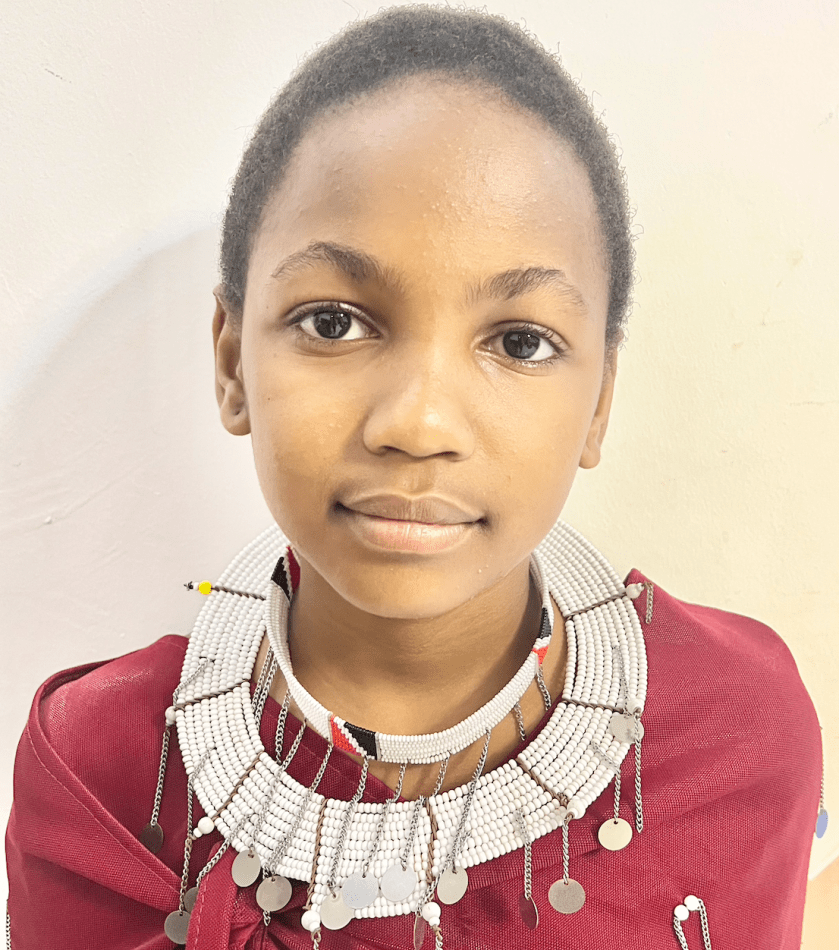
By Naipanoi Onesmo Olengurumwa, 11, Tanzania

My father and my grandfather grew up in the middle of an ecological system living with animals and nature. Yes, we coexist with animals and nature. Let’s use this indigenous knowledge to protect the Serengeti/Loliondo and Ngorongoro ecosystem and all the lives on it. Yes, we are the best implementers of SDGs goal 15 and tribe of the soil.  

We have a rich cultural heritage that is deeply intertwined with the environment. Traditionally we have developed a sustainable way of life that respects the balance of nature. This relationship positions us as crucial stakeholders in global efforts towards sustainable development, climate change adaptation strategies and guardians of life on earth. Yes, animals are part of our clans. For instance my father and grandfather are from the Irmakeseni Masai clan which also belongs to the community of zebras. Yes, we share common things, and they often come close to our homes and graze together with our cows. They run to our homes for refuge against predators. Please, for our survival as indigenous community attached to nature and for protection of ecology and ecosystem in Ngorongoro and Seregent/Loliondo Plains, don’t separate us.  

Our indigenous knowledge includes understanding seasonal migrations of wildlife and water  resources which protect the Serengeti ecosystem. We use our traditional rotational grazing styles to prevent overgrazing in any one area while promoting biodiversity by allowing  various plants to thrive and breeding of wildebeest. For instance, we have been using part of our village lands called osero with 1500 sqkm in Loliondo to conduct traditional rotational grazing. Sadly, due to on going landgrabing in our home, this land is nolonger part of our land villages. This practice supports not only livestock health but also wildlife conservation as it creates a balanced ecosystem where both domestic animals and wildlife species can coexist. Kindly, make use of our indigenous knowledge of nature management to save the Serengeti/Loliondo and Ngorongoro ecosystem, and avoid fortress conservation laws that evict us from our traditional land. We are attached to nature as indigenous conservators of nature and life on earth. Please respect this and use this knowledge to manage climate challenges in Ngorongoro.

Earth: The Sea-Life

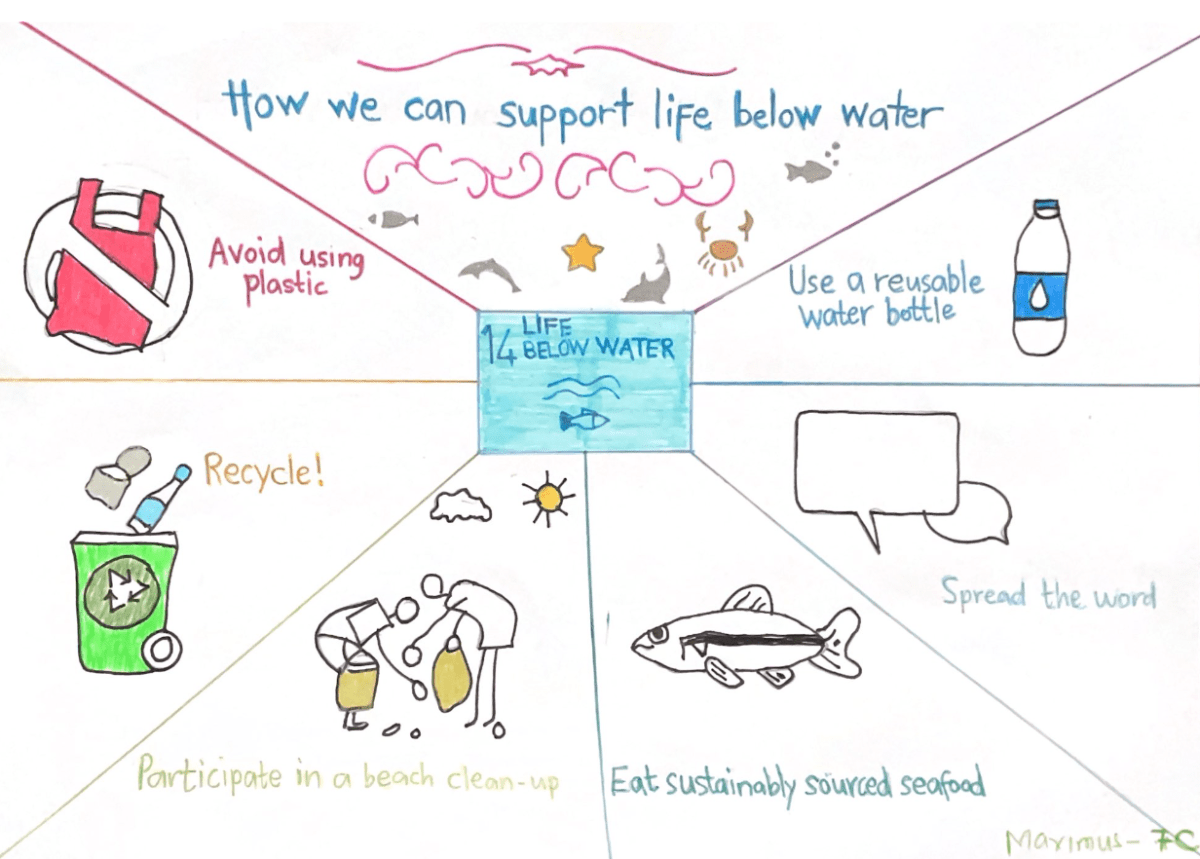
Artwork by Maximus Sanchez Francis

By Liyah Emeson, 13, UK

The SDG 14 (Sustainable Development Goal 14) is about ‘Life under Water’. The goal is “to conserve and sustainably use the oceans, seas, and marine resources for sustainable development.” In other words, this means that they aim to protect water bodies and to use marine resources in a way that as the world continues to develop, the resources will not be depleted.

The Earth is a beautiful planet with different biomes and species of life. There’s wonderful marine life in the oceans and seas. However, some of these incredible species are becoming endangered due human causes like pollution, overfishing and many more. As a planet, we need to make an effort to preserve aquatic life and, fortunately, there are many ways to do this effectively. Let’s focus on marine pollution.

Marine pollution happens when chemicals and rubbish enter the oceans due to human activities. This pollution is very harmful as it can result in damage to the environment, which affects the health of all living organisms (including humans!) and economic structures across the world.

Marine pollution can be reduced by taking care of beaches and minding our carbon footprints. Simple things like reducing litter at the beach and using fuels that release less carbon can positively impact our waters making it a safe place for aquatic life to live and thrive in.

Nonetheless, marine pollution isn’t the only problem affecting life under water. There are many other factors that affect the oceans and we need to collectively continue to raise awareness of them in order to protect the safety of our waters and ourselves.

Seeking the New Aristotle

By Peter Wales, 15, England

Around 340BC, Greek philosopher and Polymath Aristotle discovered the Earth to be in fact spherical, not flat as was the common opinion of the day (Greek evidence for the Earth’s shape and spin, 2024). This however, did not keep him from a newfound idea that Earth, of ‘high mass’ was at the centre of the known Universe (Kenny and Amadio, 2024). Similarly, in a modern day of technology and an abundance of newfound knowledge concerning the Universe and its many secrets, along with the modernisation of our daily lives, life on our planet has adapted and thrived. Yet, like Aristotle, we have drawn our eyes away from the startlingly obvious reality that our Earth is indeed not perfect or invincible. Through neglect and ignorance, we have driven our planet’s oceans and land into a place of Armageddon, likely to not only destroy the human race, but the Earth itself.

To deal with such fundamental issues, the United Nations devised seventeen Sustainable Development Goals (SDGs), of which 14 and 15 concern life below water and on land. Although these are a useful starting point, there are some underlying flaws. Firstly, however accurate and desirable these goals might be, they have not been enforced, leading to minimal action being taken in many cases. The main culprits are first world countries which should indeed be tasked in leading such action. I believe that the goals which are set at each COP summit every year must be individualised according to each country’s economic and environmental position. Furthermore, the goals set must aim to be achieved within four years, leading to smaller, more achievable goals, more progress, and less chance for governments to let their burden be passed onto the successive government. 

In relation to both SDG 14 and 15, there must be steps taken to make global improvement more achievable. One such step could be addressing the issue of unregulated large bodies of water, since almost sixty percent of freshwater bodies on our planet are transboundary (United Nations, 2023), meaning they are not managed by one country alone, leading to potential harmful activity in the absence of cooperation and standardised regulation. Cases such as deep sea mining, which directly harms the seabed, and ‘sea dumping’, where marine litter is deliberately or accidentally released into the seas or ocean, are a growing problem. A solution to this could be allocating unowned bodies of water to governments with the stability, capital and willingness to regulate them. 

Our Earth has been home to life for almost 4.3 billion years (Koppes, 2022), an anomaly in the Universe, a blip of life. Surely it is our task to protect what life there is, to not only ensure our own survival, but the survival of all species which inhabit our great planet and have done for millennia before us.

References

Greek evidence for the Earth’s shape and spin. (2024). IOPSpark. https://spark.iop.org/greek-evidence-earths-shape-and-spin

Kenny, A. J.P. and Amadio, Anselm H. (2024, September 10). Aristotle. Encyclopedia Britannica. https://www.britannica.com/biography/Aristotle 

Koppes, S. (2022, September 19). The origin of life on Earth, explained | University of  Chicago News. News.uchicago.edu. https://news.uchicago.edu/explainer/origin-life-earth-explained#when

United Nations. (2023). Transboundary Waters. UN-Water. https://www.unwater.org/water-facts/transboundary-waters

Drawing for Wildlife

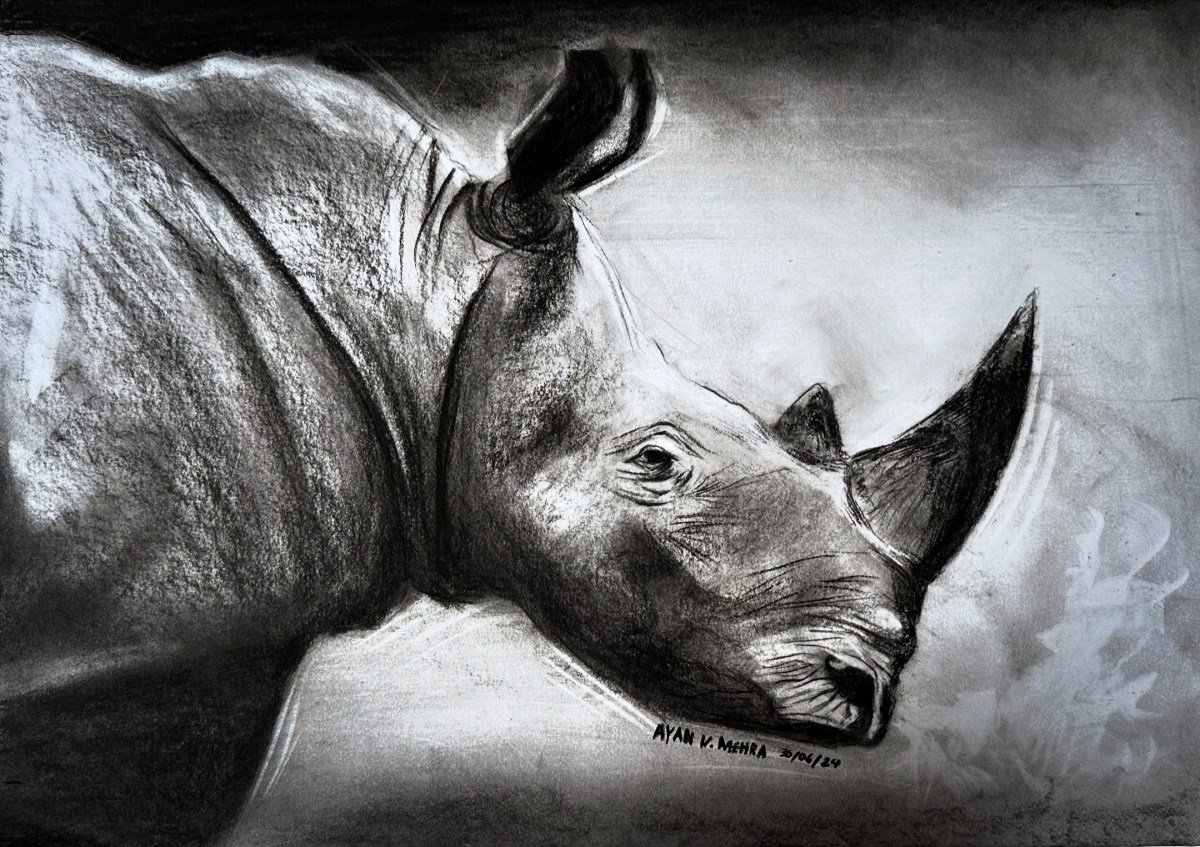
Drawing by Ayan Kamath Mehra

By: Ayan Kamath Mehra, India/Singapore

Qualia – coined by philosopher C. I. Lewis – refers to ‘instances of subjective, conscious experience’. For example, running your fingers through cold water, the experience of seeing the colour purple, and the struggle of lifting a new PR (personal record in lifting). These moments cannot be shared. Human language fails to transfer experiences from one person to another. No matter how many words are used in just the right way, it is impossible to explain the colour purple to a person born blind. Qualia cannot be shared.

However, I think art comes very close. While it may not transmit the exact experience, art can move an audience to feel the same way about said experience. This is why, I think, it is one of the most powerful tools for wildlife conservation. Art can make people care about the cause, appreciate the sentience of animals, and instil a passion to fight cruelty.

Incensed by the plight of rhinos brutally slaughtered for their horns; at the age of eleven, I decided to combine my passions for art and wildlife to raise awareness and funding for endangered species. I created savewildlife.art: a platform that celebrates animals through art and storytelling. In five years, savewildlife.art has raised funds to adopt 24 endangered animals around the globe, but perhaps more importantly has created awareness and ambassadors for wildlife conservation among the many people who have engaged with the art and stories on the platform.

Most recently, savewildlife.art partnered with Drawing for the Planet to create The Tiger’s Forest – an art workshop that goes to schools across India, Singapore, the UK, and the US, educating and inspiring children about our shared natural wealth in tigers and the animals that live in their ecosystems. By reaching thousands of children with art workshops we hope to evoke feeling and action, creating the next generation of wildlife warriors to nurture our planet.

Can the New BNG Policy Improve ‘Life on Land’ in the UK?

By: Rowena Shivam, 18, UK

‘Halt biodiversity loss’ is a crucial part of Sustainable Development Goal 15. Globally, over 1 million animal and plant species are facing extinction (United Nations, 2019). The United Kingdom has the lowest level of biodiversity in the G7 but also one of the worst housing crises (House of Commons Environmental Audit Committee, 2021). House-building, along with associated infrastructure development like roads, transport and waste disposal, leads to habitat destruction and biodiversity loss. This creates issues for sustaining life on land.

Over the last year, I have been following the development of a new UK law that could significantly improve our progress towards SDG 15: Biodiversity Net Gain (BNG). BNG is a novel approach to land management that leaves biodiversity in a measurably better state than before any development. This policy could create or enhance up to half a million hectares of biodiverse habitat in the UK by 2030 (National Audit Office, 2024). Whether this level of success is achieved or not will be determined by the BNG Metric which analyses the size, condition, importance and location of new habitats. All new developments must generate at least 10% more habitat than previously existed in the area, helping wildlife to thrive (Department for Environment, Food & Rural Affairs, 2024).


BNG isn’t just for animals and plants; it can sustainably improve life on land for people too. It has increased the amount of land approved for new housing. Better access to nature will improve our physical and mental health. Increased vegetation will help reduce pollution and flash flooding. Even the economy is being boosted through BNG with new jobs in research, planning and legislation (The Environmental Agency, 2024).

However, there were some challenges that delayed BNG’s implementation. To better understand these issues I surveyed a group of 21 policymakers, homeowners, lawyers and conservationists. Only 38% believed BNG could significantly improve the UK’s biodiversity and 50% felt it might instead worsen our housing crisis by increasing prices. Nonetheless, BNG has now been mandatory since February 2024 and we are already seeing some early successes. I believe that with continued monitoring, evaluation and data collection over the next few years, this policy could help improve wildlife and human life on land in the UK.

References

Department for Environment, Food & Rural Affairs. (2024, February 12).
Understanding biodiversity net gain. GOV.UK.
https://www.gov.uk/guidance/understanding-biodiversity-net-gain


House of Commons Environmental Audit Committee. (2021). House of Commons Environmental Audit Committee. Biodiversity in the UK: bloom or bust? First Report of Session 2021-22 HC 136.
https://committees.parliament.uk/publications/6498/documents/70656/default/


United Nations. (2019, May 6). UN report: Nature’s dangerous decline “unprecedented”; species extinction rates “accelerating” – United Nations Sustainable Development. United Nations. https://www.un.org/sustainabledevelopment/blog/2019/05/nature-decline-unprecedented-report/ 


National Audit Office. (2024). Implementing statutory biodiversity net gain.
Department for Environment, Food & Rural Affairs and Natural England.
National Audit Office.
https://www.nao.org.uk/wp-content/uploads/2024/05/implementing-statutory-biodiversity-net-gain.pdf


The Environmental Agency. (2024, April 2). The Environment Agency’s role in
Biodiversity Net Gain – Creating a better place.
https://environmentagency.blog.gov.uk/2024/04/02/the-environment-agencys-role-in-biodiversity-net-gain/

Echoes from the Deep

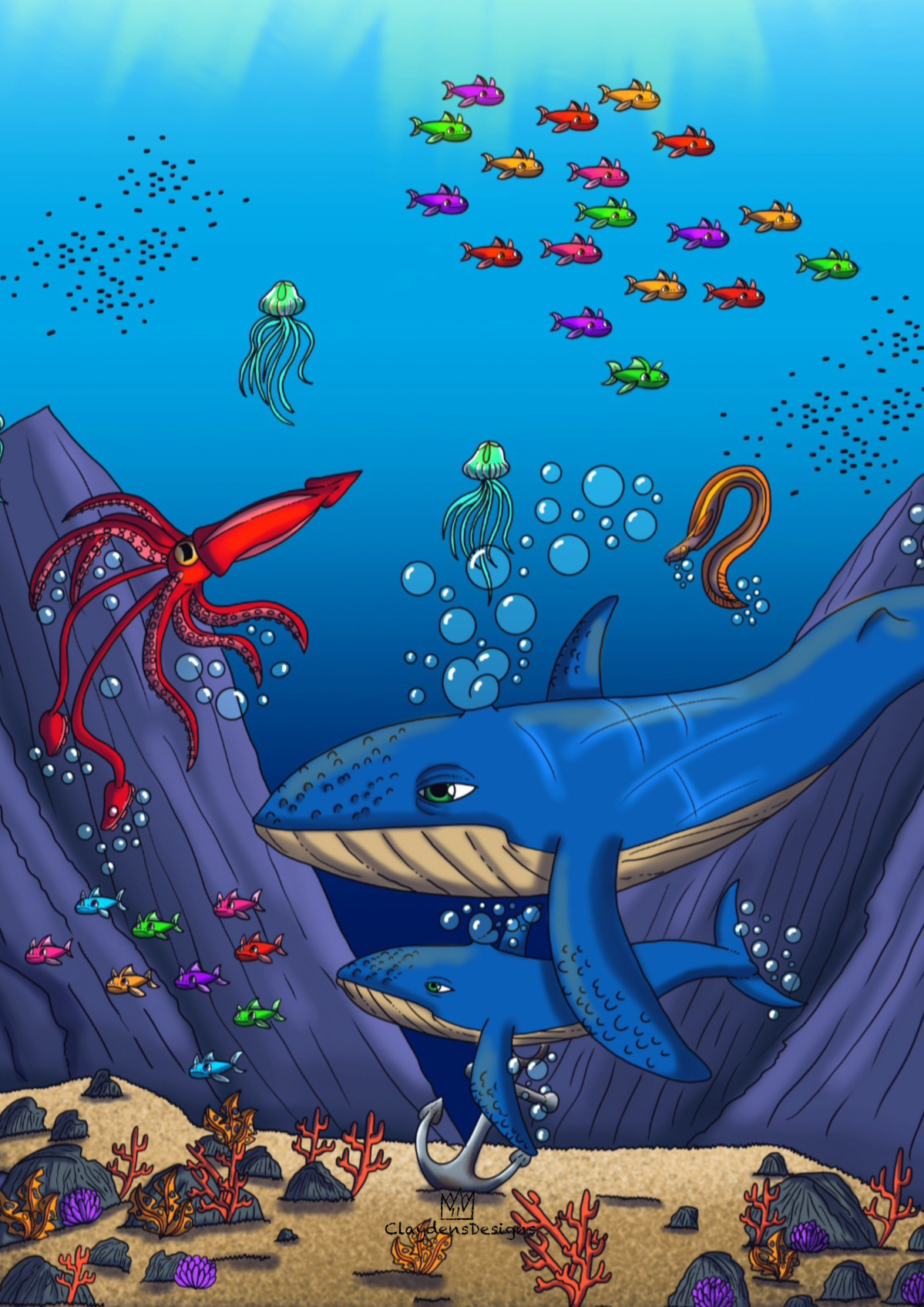
Artwork by Clayden Botes

By: Advika Gupta, 14, India/UAE

Growing up in Mumbai, the Arabian Sea was more than just a backdrop to my life; it was a part of who I was. Family outings to Juhu Beach, school trips exploring coastal biodiversity—it all ingrained in me a deep love for the ocean. But in 2021, that love took on a new urgency. The severe floods that year, which turned the lively streets of Mumbai into rivers, made me realize just how vulnerable our oceans—and by extension, our cities—are to the impacts of climate change. The relentless rain and rising sea levels left us feeling helpless as our home slowly submerged. In that moment, I realized that the ocean’s cry for help wasn’t just something happening far away. It was right here, affecting our lives in ways we could no longer ignore.


Now living in the UAE, I find myself surrounded by a different yet equally fragile marine environment. The crystal-clear waters of the Arabian Gulf have shown me the beauty of marine life but also its peril. I’ve travelled to various places, diving in the coral reefs of the Maldives, witnessing the bleaching of once-vibrant corals, and seeing plastic-choked beaches
in Southeast Asia. Each experience has deepened my resolve to act. The global scope of the problem is undeniable, but it’s the personal encounters with the degradation of these marine ecosystems that have driven me to take action.


Sustainable Development Goal 14, ‘Life Below Water’, is not just an abstract global objective, it’s a call to action that resonates deeply with me. In the UAE, I’ve joined local conservation groups focused on protecting the marine environment. One initiative that’s particularly close to my heart is our effort to restore seagrass meadows along the UAE coast. Seagrasses are often overlooked, but they play a vital role in maintaining healthy marine ecosystems. They provide habitats for marine life, act as carbon sinks, and protect against coastal erosion. Our team has been working to replant these meadows, and seeing them slowly come back to life has been incredibly rewarding.


I’ve also been advocating for the reduction of single-use plastics, organizing clean-up drives along the coastlines, and engaging with local schools to raise awareness about marine conservation. Seeing young students get involved has been incredibly inspiring. Some might wonder, can actions as simple as refusing a plastic straw or joining a beach cleanup really make a difference? But just as a forest begins with the planting of a single tree, these small, local actions are the seeds that can grow into a global movement, I hope. No effort is too small, and each one contributes to the broader fight to protect our oceans and combat the climate crisis.

As I look forward to the Conference of the Parties to the UN Convention on Biological Diversity in Cali, Colombia, in 2024, I carry with me the stories of these places, the memories of these endangered marine ecosystems, and the hope that our collective efforts can turn the tide. Protecting our oceans is a shared responsibility that transcends borders. It’s about ensuring that future generations can experience the same beauty and wonder that I was fortunate enough to witness as a child in Mumbai and now in the UAE. Do you hear the oceans crying out for help? It’s up to us to answer that call with the urgency and compassion it deserves.